AyurvedaOctober 04, 2025
The Fivefold Diagnosis: Nidāna in the Mādhavanidāna
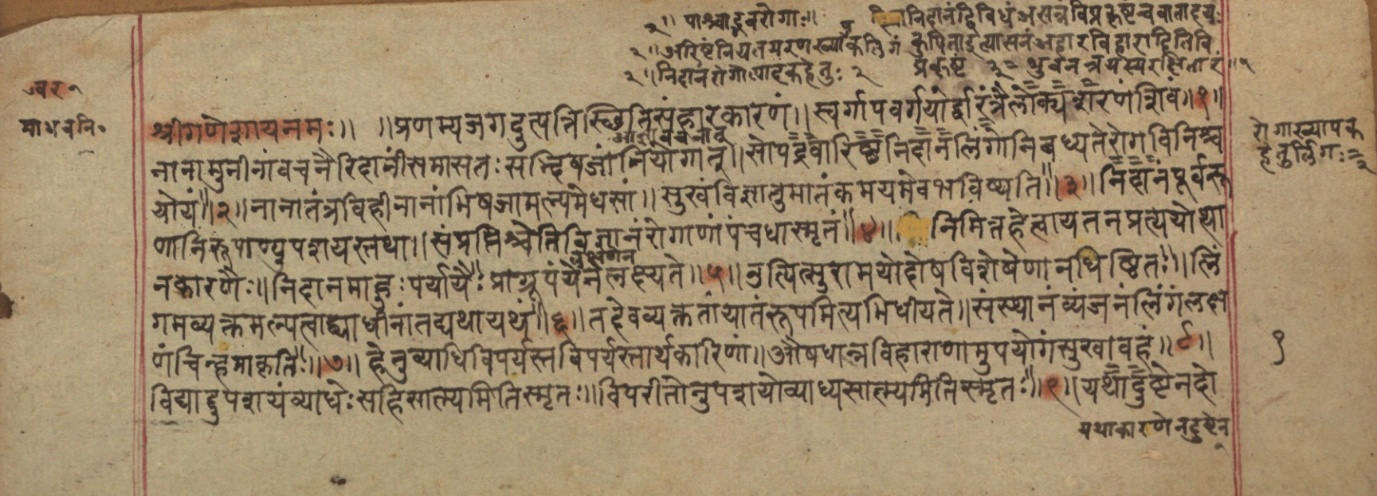
Mādhava's foundational diagnostic manual organizes the physician's task into five categories — etiology, prodrome, symptom, therapeutic test, and pathogenesis.

This manuscript preserves a significant portion of the *Mādhavanidāna*, a seminal 7th-century Ayurvedic diagnostic treatise authored by Mādhavācārya, housed in the Poona University Collection at the Bhandarkar Oriental Research Institute. The text exemplifies the classical nidāna (etiology) tradition, systematically delineating the fivefold diagnostic framework (*pañcavidha nidāna*)—comprising etiological factors (*nidāna*), prodromal symptoms (*pūvarūpa*), clinical manifestations (*rūpa*), therapeutic response (*upaśaya*), and pathogenesis (*samprāpti*)—with particular emphasis on fever (*jvara*) classification and differential diagnosis. The excerpt reveals sophisticated nosological categorization, distinguishing eight types of fever including dual-dosha (*dvandva*) and triple-dosha (*saṅghāta*) combinations, alongside detailed symptomatology for vātaja, pittaja, kaphaja, and sannipātaja fevers. Notable features include the incorporation of mythological etiology (fever as progeny of Rudra's wrath) alongside empirical clinical observation, and the innovative conceptualization of disease hierarchies where certain pathologies serve as causative agents for subsequent disorders, reflecting an advanced understanding of disease progression and comorbidity in classical Indian medicine.
Mādhava's foundational diagnostic manual organizes the physician's task into five categories — etiology, prodrome, symptom, therapeutic test, and pathogenesis.
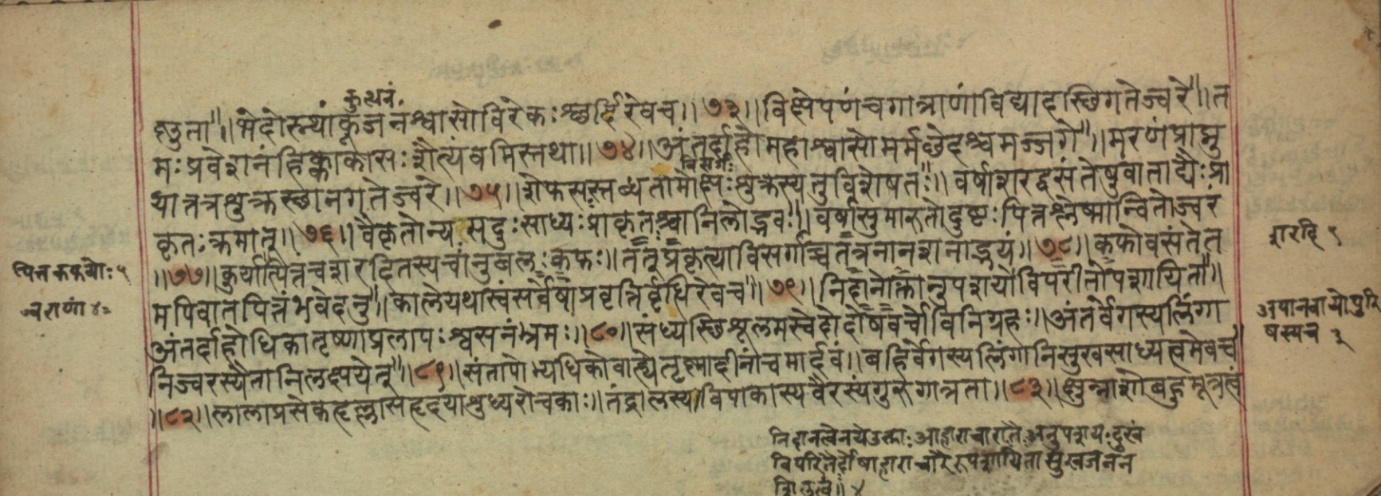
From wind-born to tridoṣic, the Mādhavanidāna's fever chapter classifies jvara by cause, tissue, and season to predict which fevers are curable.