
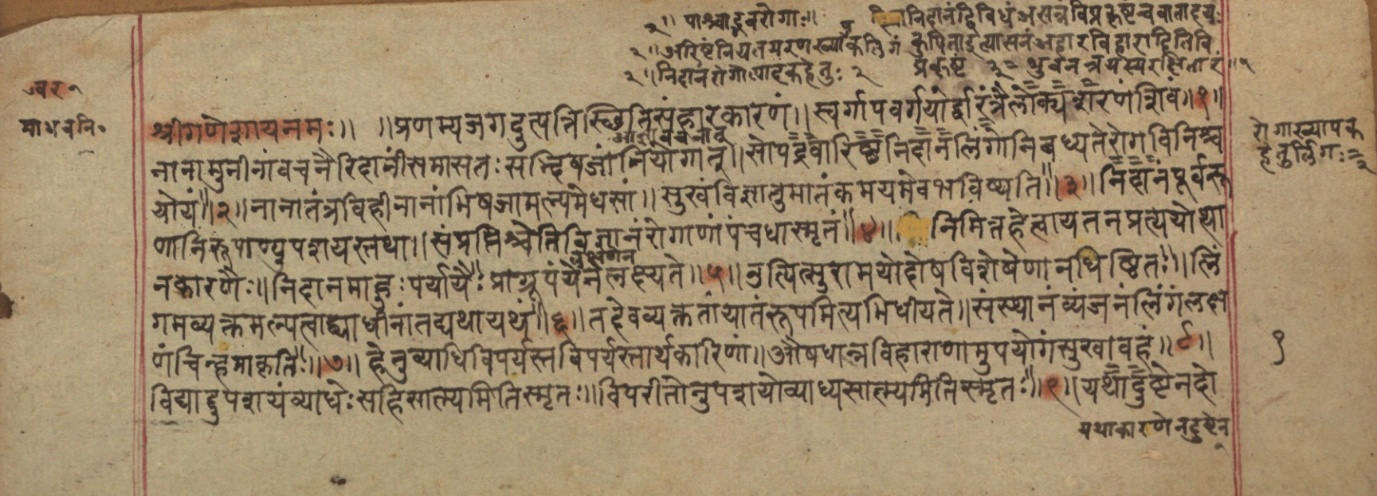
The Mādhavanidāna, composed by Mādhava in the seventh century, is the work that organized Ayurvedic diagnosis into a teachable system. This manuscript copy, preserved in the Poona University Collection at the Bhandarkar Oriental Research Institute, opens with a compact statement of the whole method.
The text declares that physicians of little intelligence, devoid of vast treatises, can understand disease through five knowledges: nidāna (etiology), pūrvarūpa (prodromal symptoms), rūpa (manifest symptoms), upaśaya (the therapeutic test), and samprāpti (pathogenesis). Each is defined in turn — nidāna by its synonyms nimitta, hetu, and āyatana; rūpa as the sign once it has become manifest; upaśaya as the employment of remedies contrary to the cause that brings happiness, and its opposite, anupaśaya, as that which aggravates.
A Diagnosis Before a Remedy
The method is emphatic: physicians must examine the disease before prescribing medicine or procedure. The fivefold framework turns diagnosis from an art into a repeatable sequence, and the text presents it as the foundation of the physician's fame and prosperity.
Nidāna, Pūrvarūpa, Rūpa, Upaśaya, and Samprapti — these fivefold knowledges of diseases are remembered.
Reading the Body's Signs
The manuscript shows the framework in action. Fevers are located in tissues — trembling of fat and bone, loss of consciousness, vomiting, and purgation marking fever in the bone; darkness before the eyes, hiccup, and internal burning marking fever in the marrow. Prognosis follows the same logic: a fever in the flesh is curable, while one that has reached the marrow is a sign of death. Even the seasons are folded into the diagnosis, with fevers arising from vāta in the rainy season, pitta in autumn, and kapha in spring.