Yuddha KalaJune 29, 2026
The Mirror of War: Vowels and the Reading of Battle
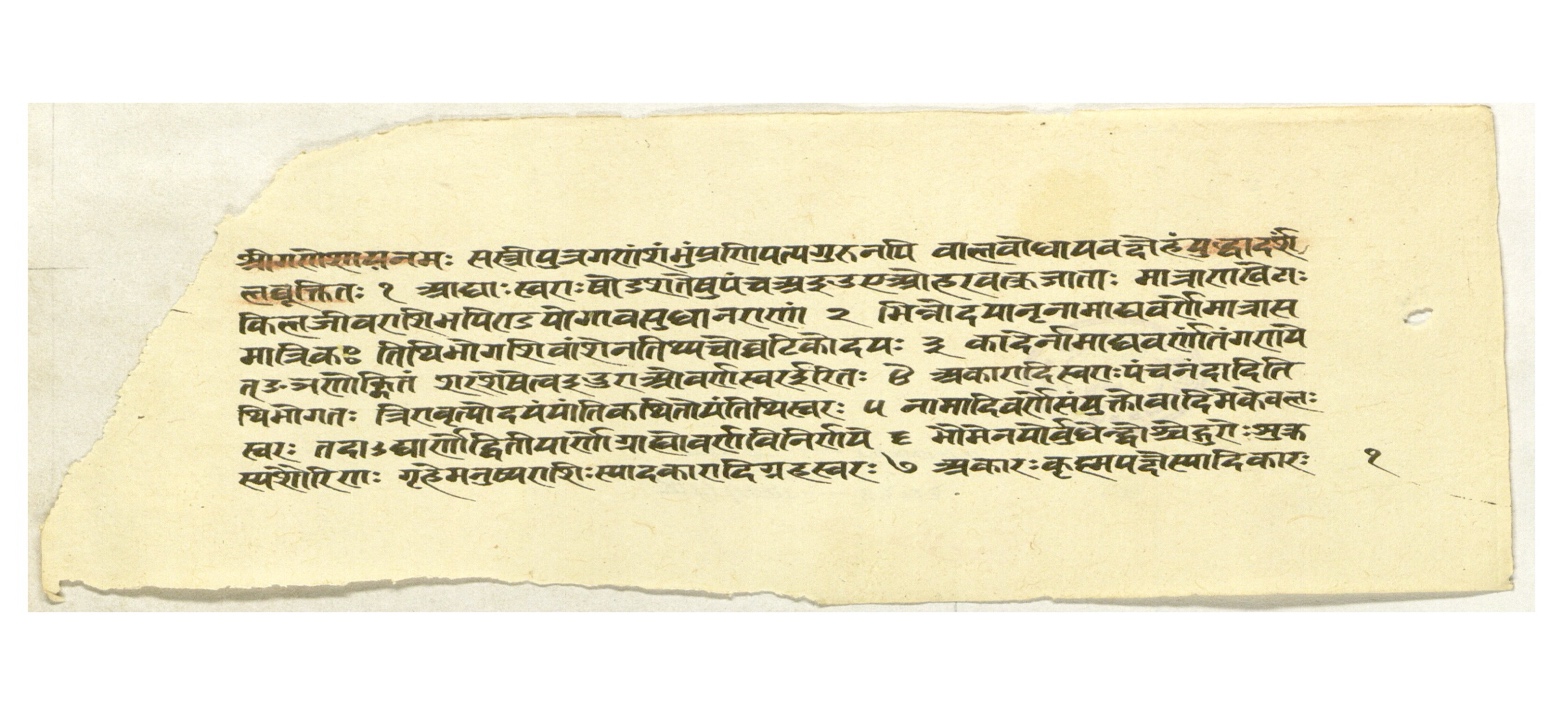
Yuddhādarśa — 'the mirror of war' — reads the five vowels A, I, U, E, O as the keys to tithi, nakshatra, and ascendant, and the messenger's syllable as the omen of outcome.

This Sanskrit manuscript presents a treatise on *svara-śāstra* (phonetic astrology), a specialized branch of Indian divination that correlates vowel sounds (*svara*) with temporal, astrological, and physiological phenomena. The text systematically expounds methods for calculating "vowel risings" (*udaya*) based on lunar days (*tithi*), asterisms (*nakṣatra*), planetary positions, and matra-based time units, demonstrating sophisticated integration of phonetics, mathematics, and horoscopic prediction. Notable features include detailed algorithms for determining auspicious/inauspicious outcomes through vowel numerology, fetal sex prediction (*garbha-praśna*), and the *haṃsa-cāra* (solar-lunar nadi pulse system) for medical and mantic purposes. The work exemplifies the medieval Indian scientific tradition of encoding prognostic knowledge within phonetic-mathematical frameworks, with verses attributed to or transmitted through guru-lineage (*guru-sammatāt*).