Sanskrit
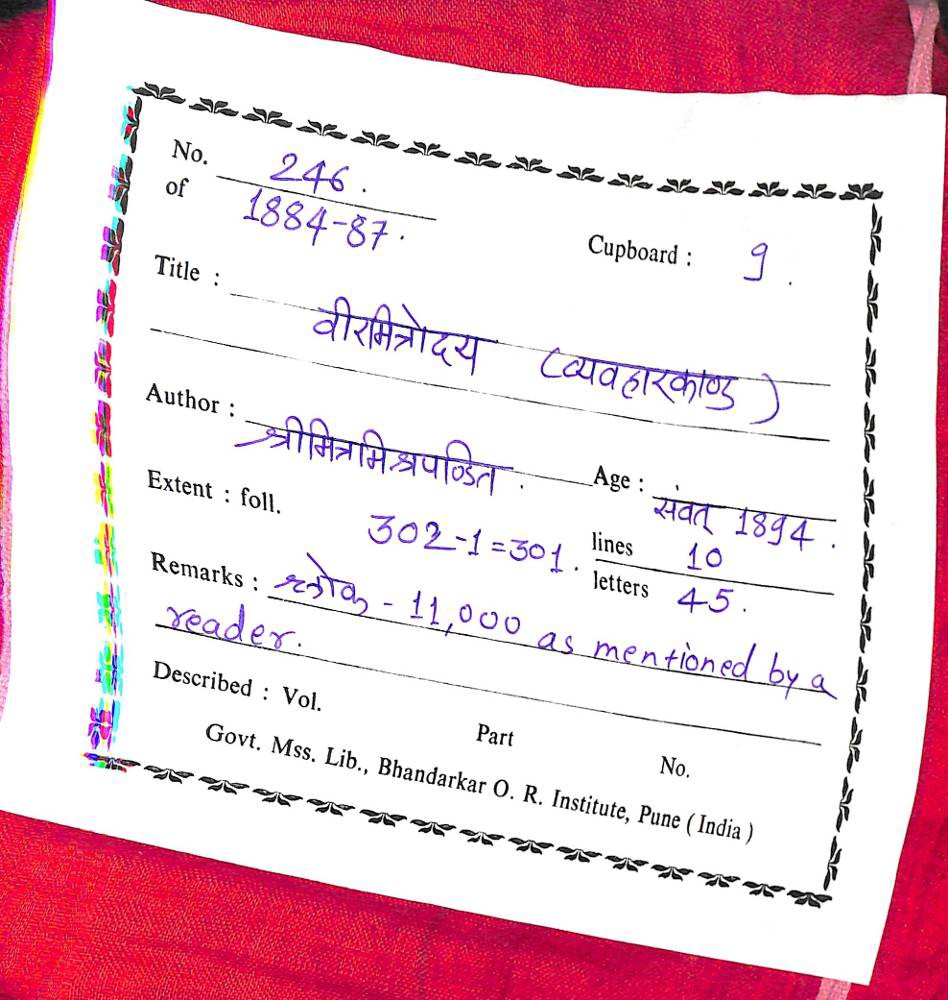
Vīramitrodaya (Vyavahārakāṇḍa)
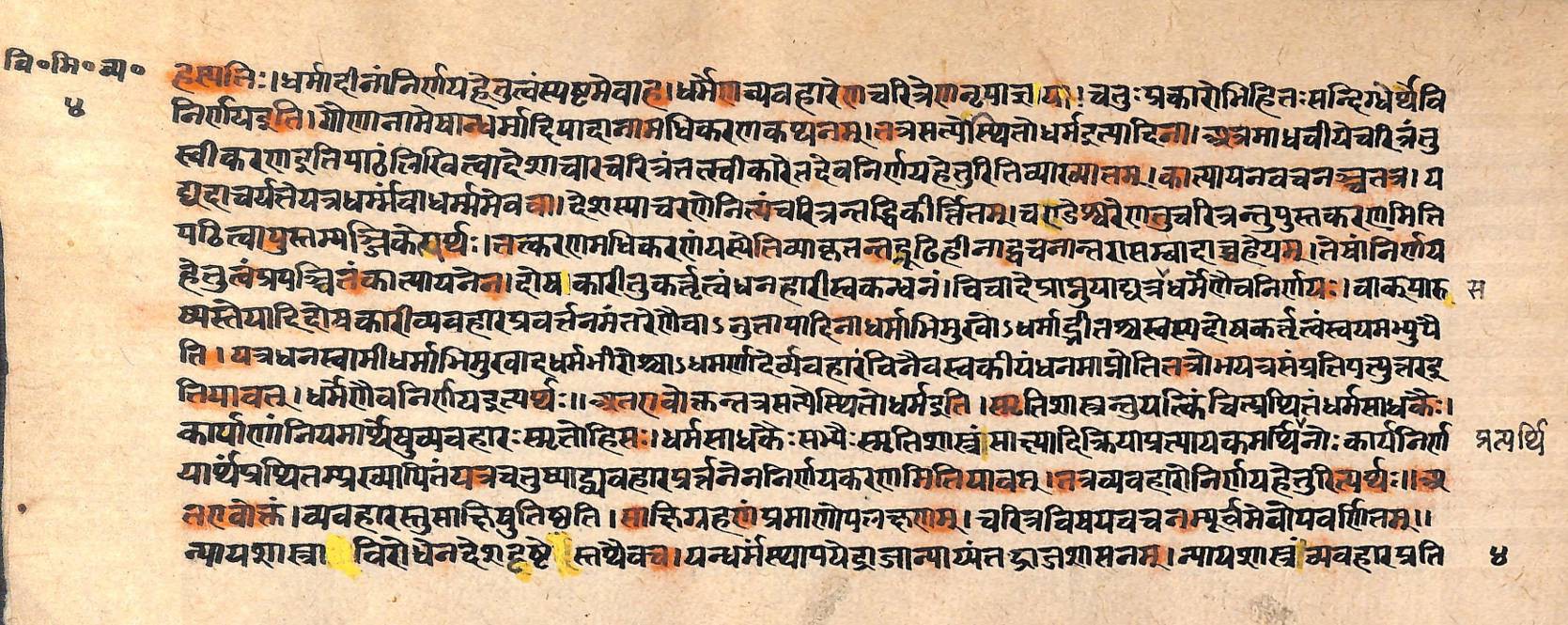
This manuscript presents a section of the *Vīramitrodaya*, an influential 17th-century Sanskrit legal digest (*dharmaśāstra*) composed by Mitramiśra, a scholar in the court of King Vīrasimha. The text sample comprises the opening verses and the beginning of the *vyavahāra* (legal procedure) section, which systematically defines *vyavahāra* as judicial process involving disputants' mutual opposition before royal authority. Notable features include the elaborate *maṅgala* verses invoking Gaṇeśa, the structured enumeration of eighteen *vyavahārapadas* (titles of law), and a sophisticated philosophical discussion distinguishing *vyavahāra* from mere *pramāṇa* (valid cognition) or *kathā* (discourse), drawing upon Yājñavalkya and engaging with rival interpretations such as those of Gopāla and the *Mitākṣarā*. The text exemplifies the scholastic *prakaraṇa* genre with its characteristic blend of verse (*śloka*) and prose (*vṛtti*) exposition, demonstrating the systematic jurisprudential analysis characteristic of early modern Hindu legal literature.