Purana-ItihasaJune 17, 2026
The Poet's Prayer: Opening the Vālmīki Rāmāyaṇa
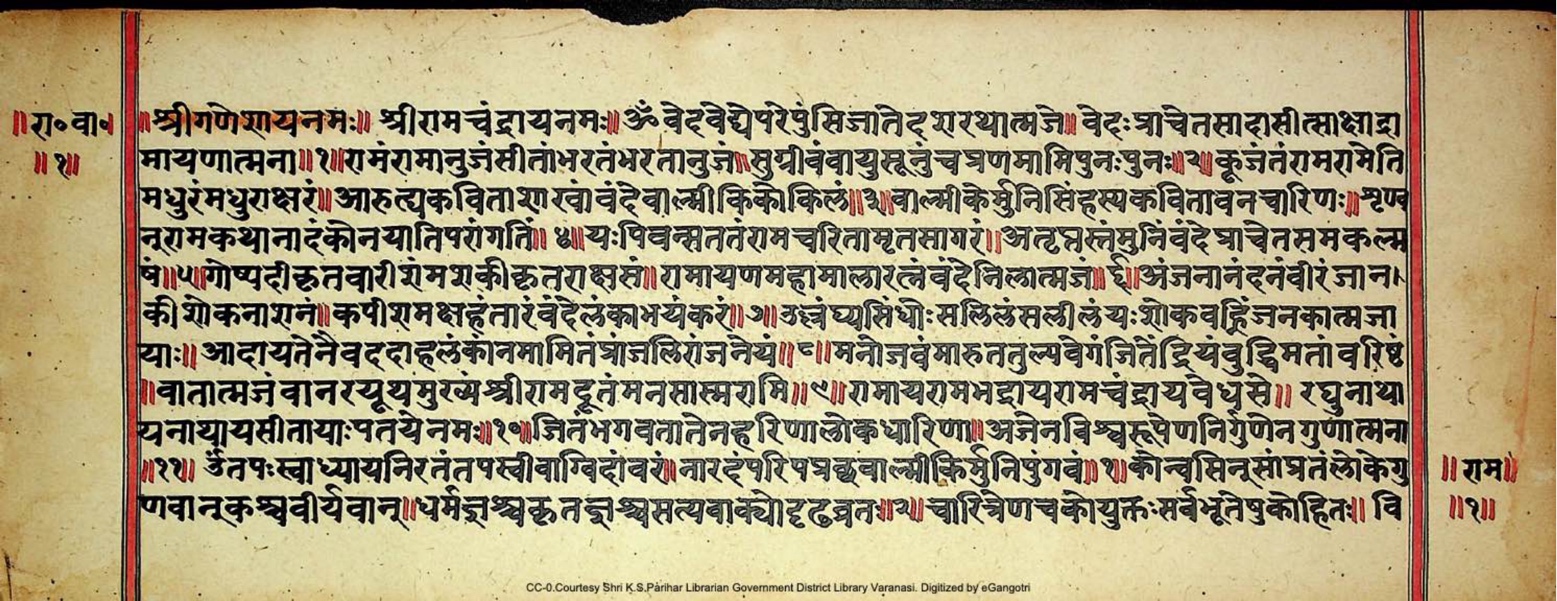
A Rāmāyaṇa manuscript opens with the poet's homage — Vālmīki as the cuckoo on the tree of poetry, and Rāma's virtues announced before the story begins.

This manuscript presents a Sanskrit recension of the *Vālmīki Rāmāyaṇa*, one of the two major Sanskrit epics of ancient India and foundational text of Hindu dharma. The excerpt comprises the opening verses (*maṅgala-śloka*s) and the condensed narrative of the *Bālakāṇḍa* (First Book), including the divine attributes of Rāma, his exile to the forest, the accompanying figures of Sītā and Lakṣmaṇa, Bharata's refusal of kingship, and the initial encounters with forest sages and demons. The text exhibits characteristic features of classical Sanskrit epic poetry (*śloka* meter), with interspersed devotional invocations to Gaṇeśa, Rāma, and Hanumān, alongside the distinctive verse-numbering conventions and manuscript foliation markers typical of Indological textual transmission.