GanitaJuly 29, 2026
One to a Parārdha: The Names of Numbers in Līlāvatī
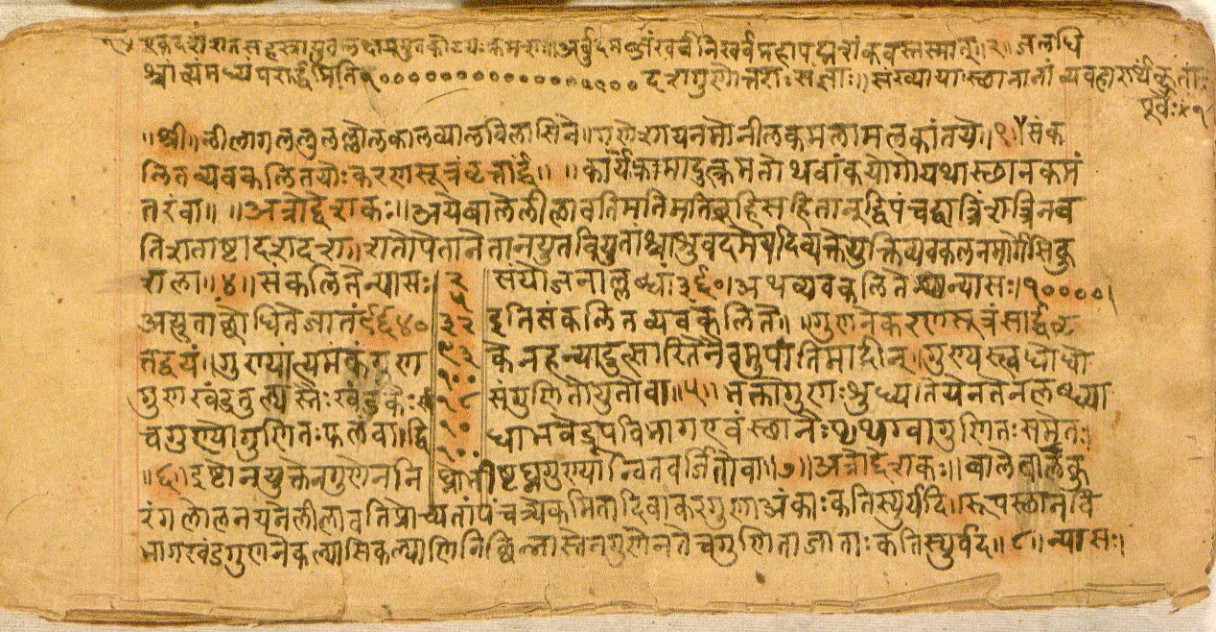
A Līlāvatī copy lists the names of number-places from one to parārdha — a lakh, a kharva, a mahāpadma — the ancient ladder of tens that made big numbers speakable.

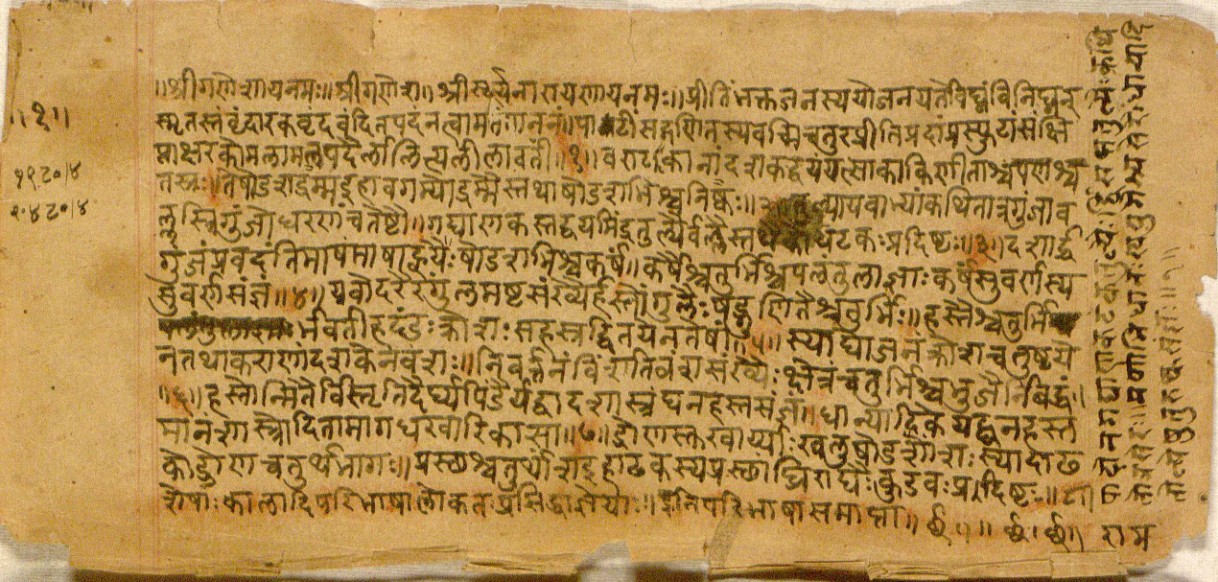
This Sanskrit manuscript presents a section of Bhāskara II's *Līlāvatī*, a foundational 12th-century treatise on Indian mathematics. The text covers metrological units (weights and measures), arithmetic operations including addition, subtraction, multiplication, and division, as well as methods for squaring numbers and extracting square roots. Notable features include the use of versified sūtras (rules) followed by worked examples (uddeśakas), tabular numerical layouts, and multiple algorithmic approaches to solving problems—such as decomposition methods for multiplication and iterative techniques for root extraction. The manuscript exemplifies the sophisticated pedagogical structure of classical Indian mathematical literature, blending technical precision with poetic elegance.