AyurvedaSeptember 18, 2025
Kālajñāna: When Time Itself Becomes the Diagnosis Itself
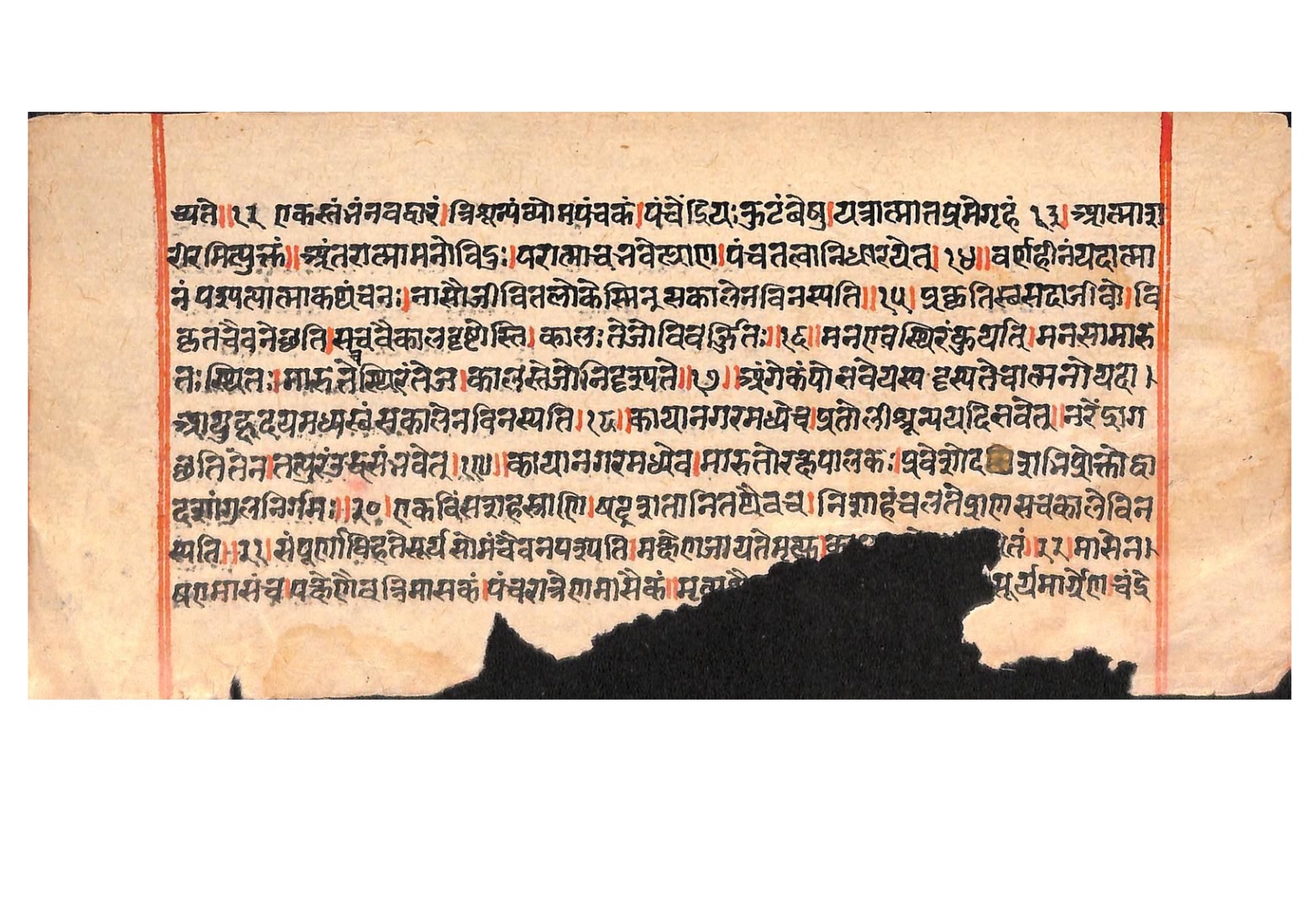
Śambhunātha's treatise on the knowledge of time counts the breaths of a lifetime and reads the pulse for signs of death, fusing physiology with prognostication.

This Sanskrit manuscript presents a treatise on *Kālajñāna* (the knowledge of time/death), a specialized branch of Indian medical prognostication attributed to Śambhunātha. The text systematically delineates temporal physiology through verses describing how *kāla* (time/death) governs biological processes, including the twenty-one thousand six hundred breaths constituting daily life force (verse 21) and the six cakras with sixteen ādhāras of the subtle body (verse 12). Particularly noteworthy is its integration of astromedical theory—correlating solar and lunar currents (*sūrya-mārga* and *candra-mārga*) with vitality—alongside detailed clinical signs (*sākala* and *nikala* states) for determining curable versus fatal conditions. The manuscript exemplifies the tantric-medical synthesis characteristic of medieval Hindu prognostic literature, where microcosmic bodily time mirrors macrocosmic dissolution.