UpanishadApril 02, 2026
Enveloped by the Lord: The Īśāvāsya's First Line
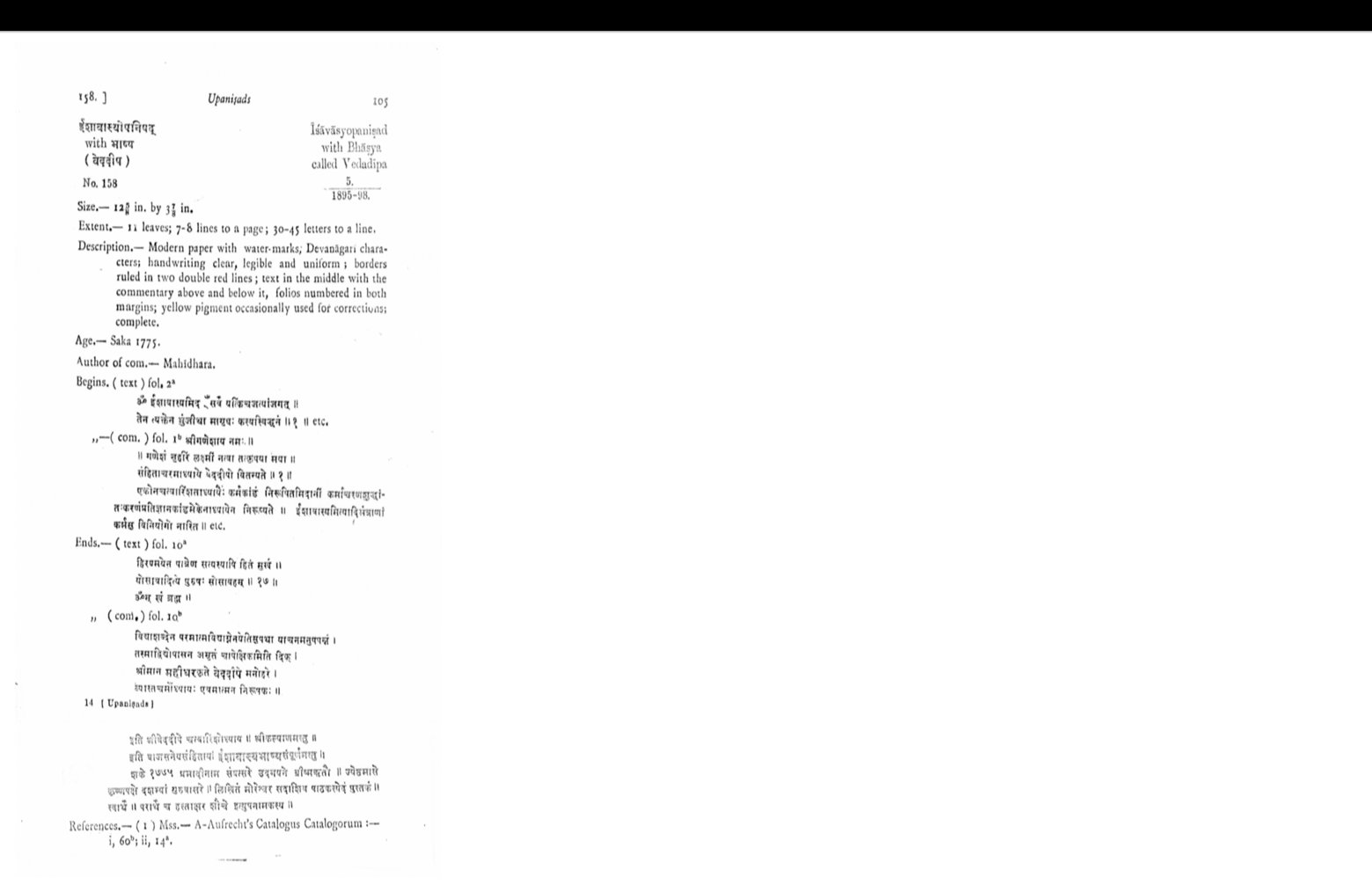
The Īśāvāsyopaniṣad opens with the injunction to cover the moving world with the Lord — and this manuscript pairs the famous verse with its ritual use in the saṃhitā.

This manuscript presents a Sanskrit commentary on the Īśāvāsya Upaniṣad, a foundational text of Vedānta philosophy belonging to the Śukla Yajurveda. The text interweaves the original Upaniṣadic verses with extensive exegetical material addressing the relationship between knowledge (jñāna) and ritual action (karma), a central debate in classical Indian thought. Notable features include discussions of naiṣkarmya-karma (desireless action) as a means to liberation, the distinction between higher and lower knowledge (parā and aparā vidyā), and the hermeneutic principle that knowledge and action must be combined rather than pursued in isolation. The commentary exhibits characteristics of the Bhāṣya tradition, with particular attention to soteriological methodology and the purification of the inner instrument (antaḥkaraṇa-śuddhi) as prerequisite to mokṣa.