Sanskrit
Ekavastrasnānavidhi
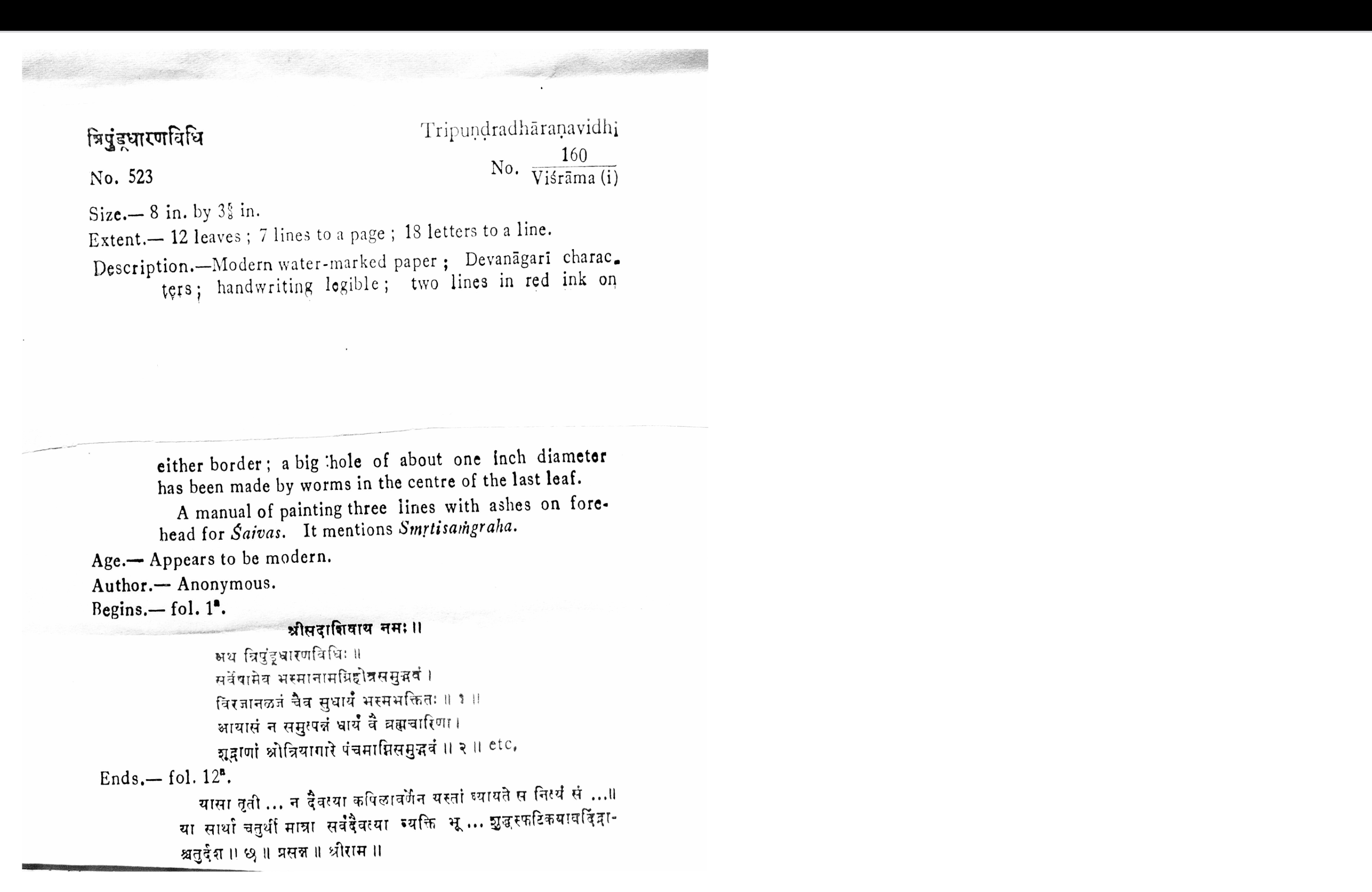
This Sanskrit manuscript presents a Śaiva ritual text focused on the application of sacred ash (bhasma) and the configuration of tripundra (the three horizontal forehead marks), constituting a significant witness to medieval Hindu liturgical practice. The text interweaves metrical verses (ślokas) with prose instructions governing the preparation, consecration, and wearing of bhasma, alongside mantras dedicated to Sadāśiva and procedural guidelines for achieving śivasāyujya (union with Śiva). Notable features include detailed prescriptions for nāḍī-cleansing techniques, the integration of Vedantic terminology (ātman, brahman, māyā), and complex ritual taxonomies distinguishing between kalpanā (conceptual), mantra-based, and ābhicārika (magical) modes of establishment (sthāpana). The manuscript's hybrid structure—combining Sanskrit verse with vernacular glosses and scribal annotations—suggests its use as a practical priestly handbook rather than a purely theoretical treatise, offering valuable insight into the lived transmission of Śaiva siddhānta traditions.