Purification in the ritual tradition was precise — which ash, which bath, which garment. The Ekavastrasnānavidhi — 'the bath with a single garment' — is a manual of that precision, beginning with the most common of daily acts: the tilaka drawn on the forehead.
The best ash
The text opens with a hierarchy of ashes for the sacred mark.
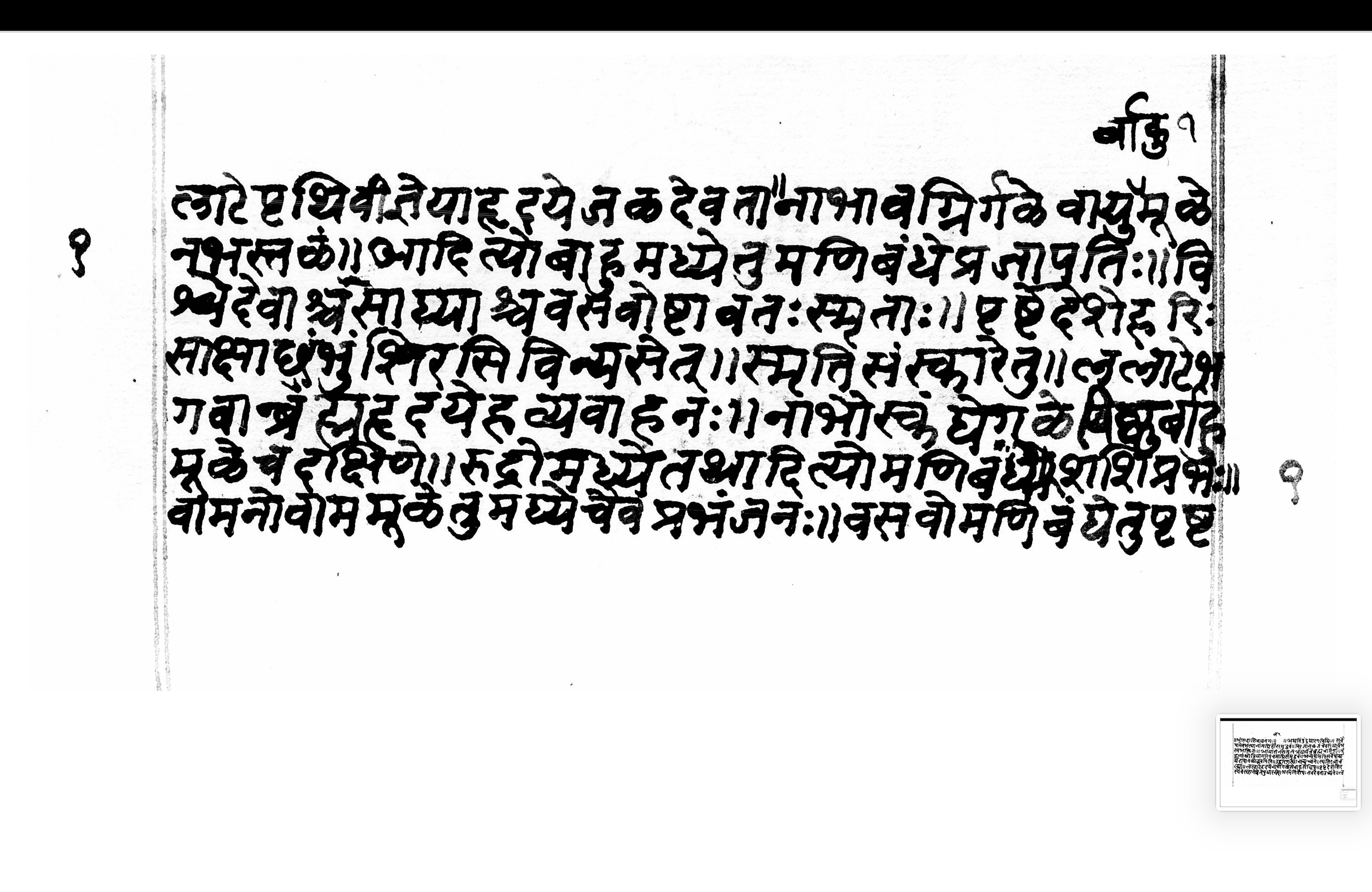
Salutations to Śrī Sadāśiva. The procedure for applying the broken three-line tilaka. Of all ashes, the Agnihotra ash rises supreme. The ash born from the Virajā and the Jaiva is excellent and imperishable. Fatigue does not arise, nor does fear from enemies. For the faithful in the house of the Śrotriya, the Pañcamāpṛi arises.
Not all ash is equal — the ash of the Agnihotra fire, kept burning by the twice-born, outranks all others. The material of the mark carries the power of the fire it came from.
The body's inner geography
The manual then turns to the body itself — the navel as the seat of the wind, and the meditation that goes with the rite.
When the sun is in the sign of Aries, the navel is the place of the wind. The first syllable is the root, the jewel-band is recited. The Viśvedevas are remembered as having come together for the sake of this. For this reason, the heart is made of essence, the head is made of essence, the body is made of essence.
Ritual as a full-body practice
The Ekavastrasnānavidhi is a reminder that the ritual tradition did not separate the outward act from the inner life: the ash on the forehead, the bath in the river, and the meditation in the heart were one practice. This manuscript, with its title page promise of a single-garment bath, preserves that unity — purity as a state of the whole person, marked, bathed, and meditated into being.