NeetishastraJanuary 17, 2026
Effort and the Sleeping Lion: Cāṇakya's Practical Wisdom
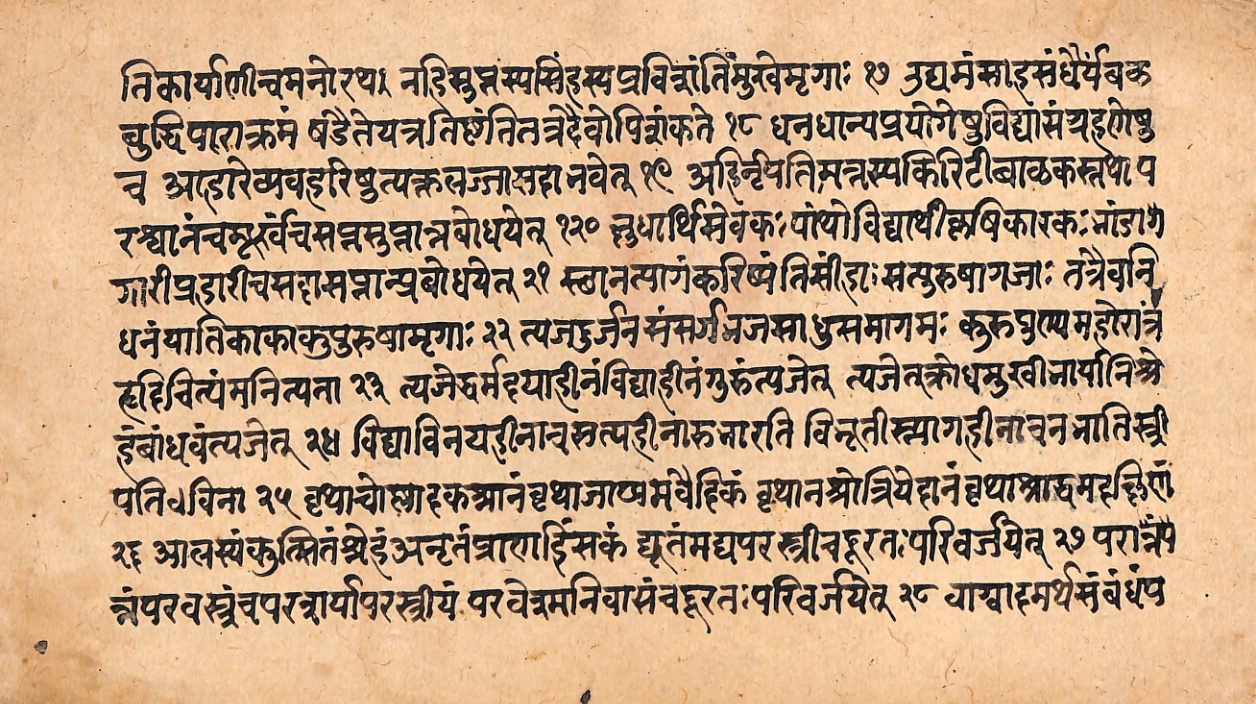
Cāṇakyanīti gathers the minister's aphorisms — works are not accomplished by wishes, for deer do not enter the mouth of a sleeping lion.

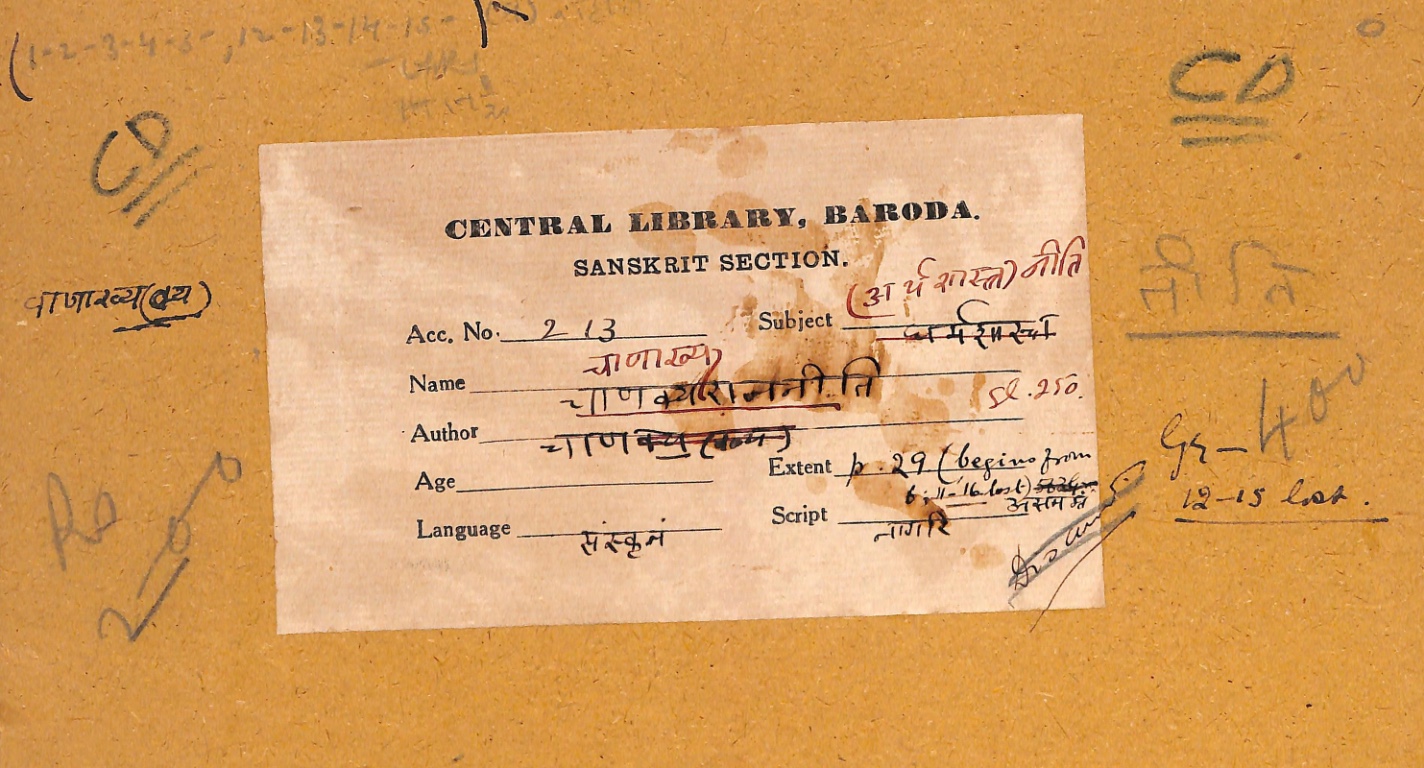
This manuscript fragment from the Central Library, Baroda, preserves a Sanskrit Nīti-śāstra text attributed to Cāṇakya, specifically the *Cāṇakya-rājanīti*, comprising approximately 250 ślokas in Nāgarī script. The catalog record reveals significant textual instability: the subject classification shifted from Arthaśāstra and Dharmaśāstra to Nīti, while the author attribution shows editorial uncertainty with "Cāṇakya (vṛddha)" being struck through, suggesting scholarly debate regarding the text's relationship to the legendary minister of the Mauryan court. The preserved verses (numbered 6–28 with lacunae) constitute a classical mirror-for-princes literature, offering pragmatic counsel on statecraft, social conduct, and ethical discernment through memorable aphorisms on friendship, diligence, and the avoidance of vice. Notable features include the manuscript's fragmentary condition (pages 11–16 lost), its valuation at Rs 2, and the presence of corrective marginalia indicating active scholarly engagement with the cataloging process. The verses exemplify the characteristic Cāṇakyan style of stark realism, juxtaposing the utility of effort (*udyama*) against the perils of sloth (*ālasya*), and deploying natural analogies—such as the sandalwood retaining fragrance despite repeated grinding—to illustrate the resilience of noble character.