
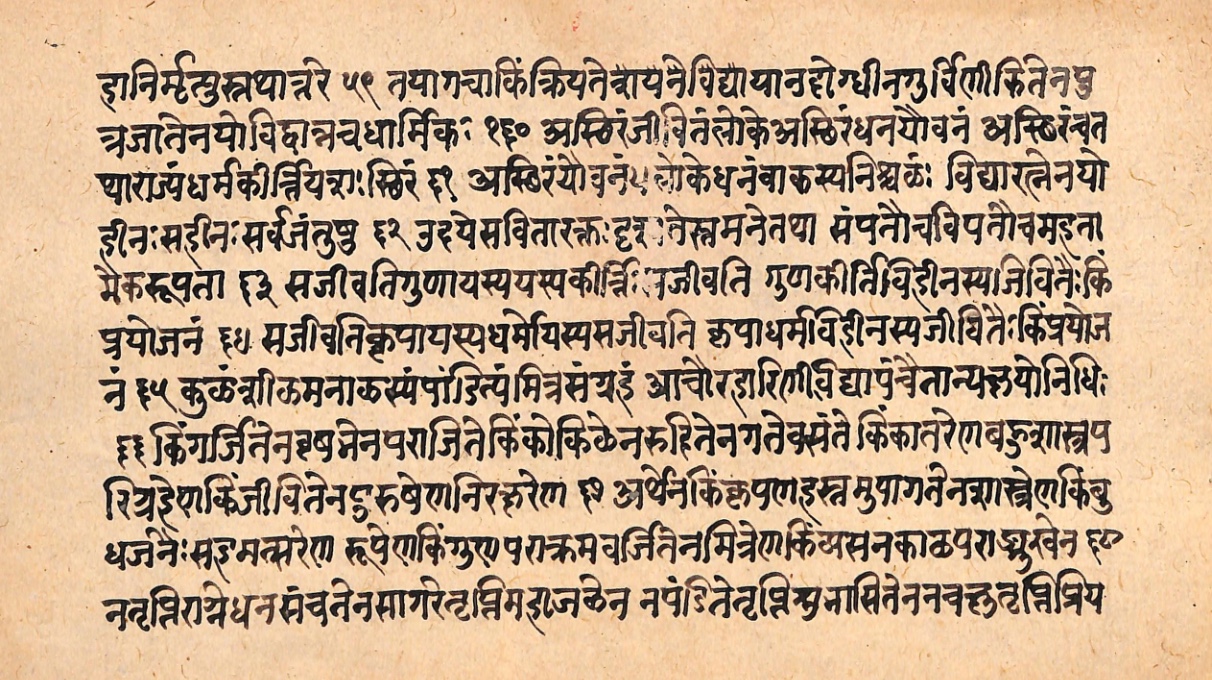
Cāṇakya — the minister who is said to have built an empire — left behind a set of aphorisms so practical they read like a field manual for life. The Cāṇakyanīti collects them, and its most famous verse is a rebuke to wishful thinking.
No wishes, only effort
The opening lesson is blunt: wanting is not doing.
Works are not accomplished by mere wishes; for deer do not enter the mouth of a sleeping lion. Where effort, courage, patience, intelligence, power, and valor reside — there even the gods hesitate.
The image is unforgettable: the lion asleep with its mouth open, waiting, and the deer walking in anyway. Fortune favors the awake.
Who to wake, who to leave alone
The same page carries one of Cāṇakya's most-quoted lists — the seven who should never be woken, and the seven who always should be.
One should not wake seven who are asleep: a snake, a king with his crown, a child, a dog, a fool, a pig, and a bear. One should always wake seven: one tormented by hunger, a servant, a traveler, a student, a farmer, a storekeeper, and a doorkeeper.
It is a lesson in timing and judgment — knowing when interference is dangerous and when it is kindness.
What is stable
The collection returns, again and again, to the question of what lasts.
Unstable is life in this world, unstable are wealth and youth. Unstable are wife and kingdom — dharma, fame, and glory are stable. He lives who has virtue; he lives who has fame. What is the use of life for one devoid of virtue and fame?
Cāṇakyanīti is the ethics of a man who had seen courts rise and fall: work, judge correctly, and invest in the only things that survive — virtue and fame. The manuscript preserves that counsel in the terse verses it was written for.