AyurvedaDecember 06, 2025
Cooked or Raw: The Signs of Āma in Bhāvaprakāśa
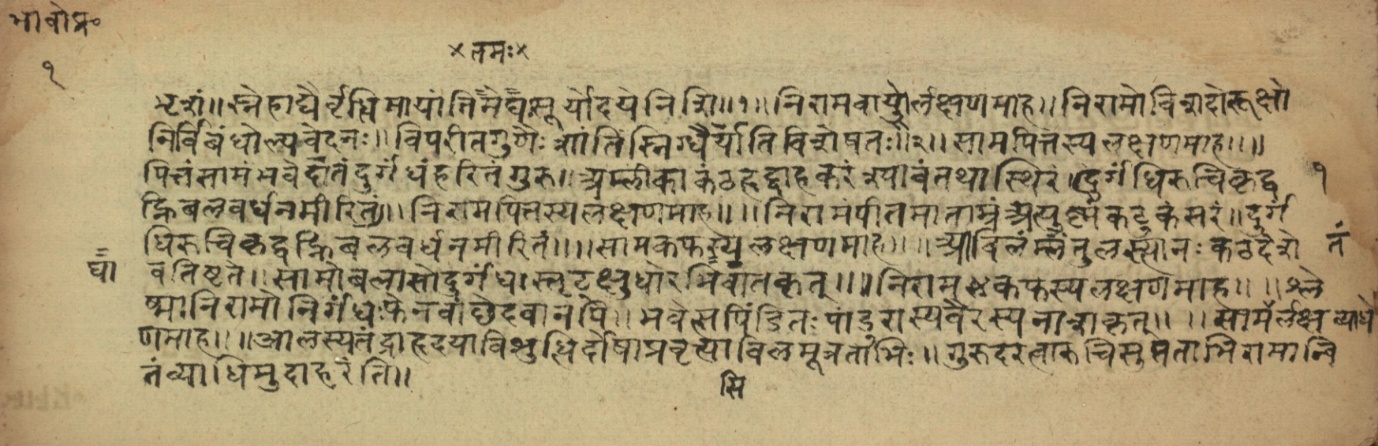
A Bhāvaprakāśa manuscript explains the difference between āma — undigested, toxic residue — and nirāma, the same doṣa once 'cooked,' with the signs that tell them apart.

This manuscript fragment, catalogued as *Bhāvaprakāśa* and attributed to Miśrabhāva, represents a significant work in Ayurvedic medicine, blending classical Sanskrit medical theory with scribal annotations. The text expounds on therapeutic procedures (*kriyā*), dosha dynamics, and pathological states (*āma* and *nirāma*), while exhibiting unique features such as regional phonetic variations, marginalia invoking deities (e.g., *Śrīgaṇeśāya namah*), and corrections indicative of active scholastic engagement. Notable are its discussions on the timing and efficacy of treatments, the interplay of *doṣas*, and diagnostic symptomatology, alongside scribal errors and emendations that reflect the transmission and adaptation of Ayurvedic knowledge. The presence of *Pāṇinīya* grammatical invocations and devotional colophons further underscores its layered intellectual and cultural context within early modern South Asian scholarly traditions.