GitaMarch 08, 2026
The Crisis Before the Teaching: Opening the Gītā
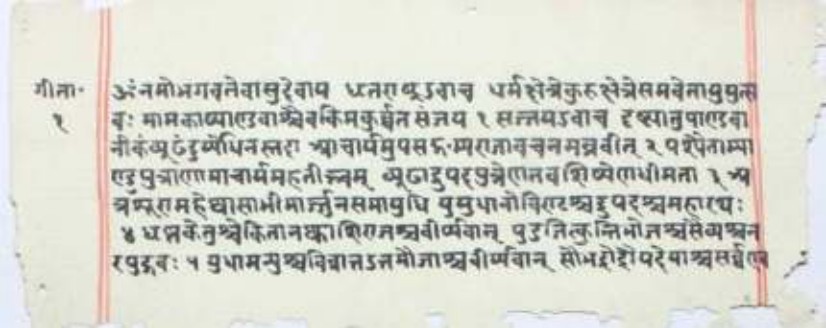
A Bhagavadgītā manuscript opens on the field of Kurukshetra — Arjuna's trembling limbs and dry mouth, the moral collapse that makes Krishna's teaching necessary.

This manuscript preserves a significant portion of the Bhagavad Gītā, the seminal Sanskrit scripture embedded within the Mahābhārata epic, comprising verses from the opening chapter (Adhyāya 1) through the transitional verse marking the beginning of Chapter 2. The text sample encompasses the dramatic dialogue between Dhṛtarāṣṭra and Sañjaya, the enumeration of opposing armies on the Kurukṣetra battlefield, and Arjuna's pivotal moment of crisis (viṣāda) as he confronts his kinsmen in the enemy ranks. Notable features include the presence of variant readings, scribal annotations, and textual markers such as "[अ]" and "[प]" indicating editorial interventions or lacunae, alongside the traditional colophonic formula identifying the work as an Upaniṣad, Brahma-vidyā, and Yoga-śāstra. The manuscript exhibits characteristic features of Indic textual transmission, including sandhi-compounded verse divisions and the use of numerical symbols (१-४६) for verse enumeration, offering valuable evidence for the study of Gītā recension history and medieval Sanskrit manuscript culture.