DharmashastraAugust 12, 2026
The Three Balls: Ancestral Rites in the Tripiṇḍīśrāddha
Tripiṇḍīśrāddhaprayoga is a manual of the ancestral rites — the three piṇḍas, the Kṣipiṇḍī rite, and the worship that keeps the departed connected to the living.

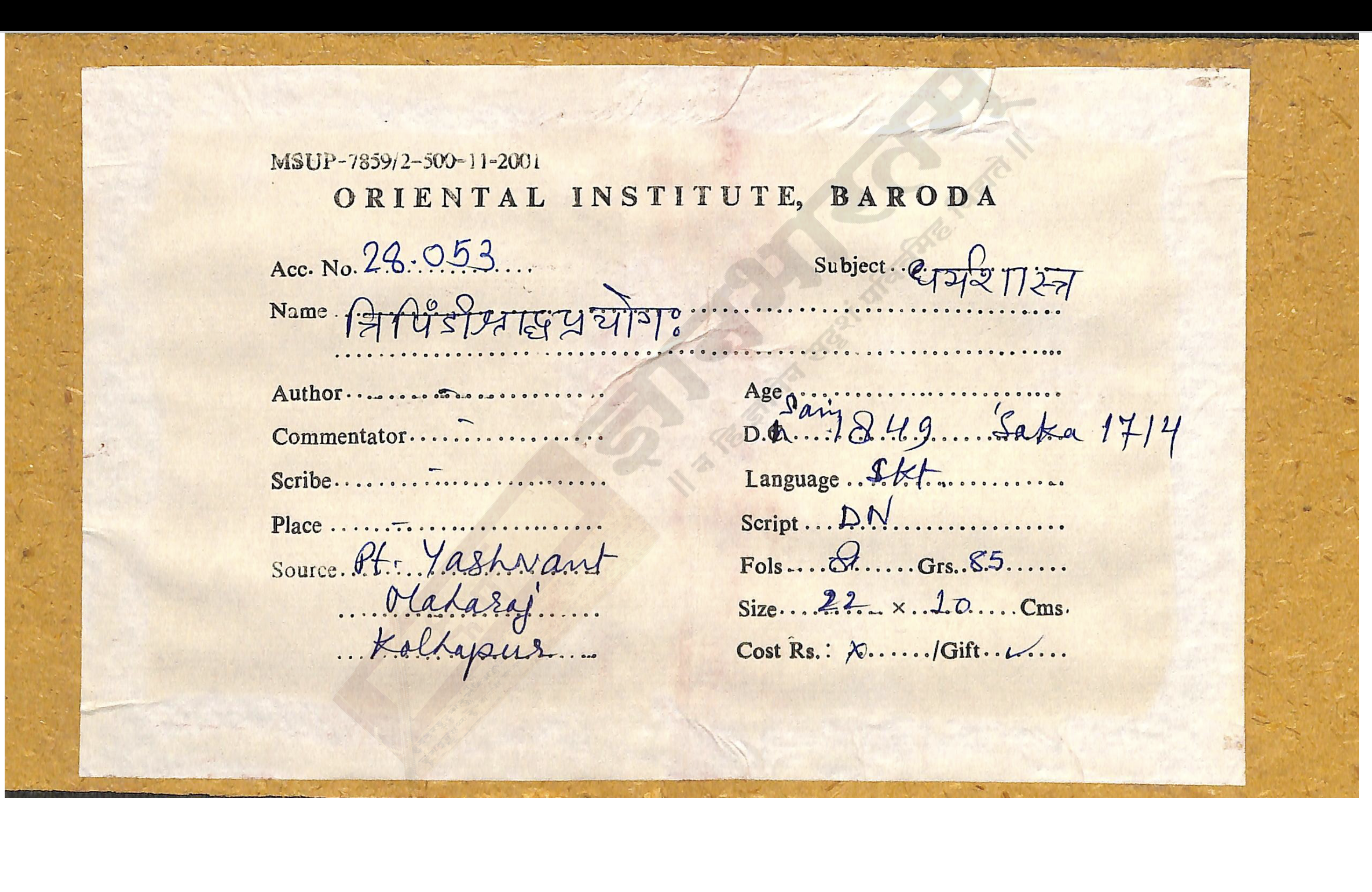
This Sanskrit manuscript, titled *Tripiṇḍīśākhāprayogaḥ* (or variant *Tripiṇḍīśrāddhaprayogaḥ*), preserved at the Oriental Institute, Baroda (Acc. No. 28.053), constitutes a ritual manual (*prayoga*) for the performance of the *Tripiṇḍī-śrāddha*, a post-funerary rite involving three rice-balls (*piṇḍa*) offered to deceased ancestors. The text delineates detailed procedural instructions including preliminary invocations to Akṣigaṇeśa, sankalpa (ritual resolve), kalśa-pūjā, nyāsa (ritual placement), and the sequential offering of piṇḍas to ancestors of the paternal and maternal lineages (*pitṛvaṃśa*, *mātṛvaṃśa*), with specific mantras and dietary prescriptions (*madhu*, *mādhāntika*). Notable features include its attention to *ajñāta-nāma-gotrā* (unknown lineage) deceased, *sāvitrī-upasthāna*, and the integration of Vedic verses such as the *madhuvāta-ṛk*, reflecting the intersection of Brahmanical liturgy and domestic funeral practice. The manuscript's scribal variants and accession dating suggest active use in early modern ritual transmission, offering valuable insight into the regional textual culture of śrāddha performance in western India.