DharmashastraMay 19, 2026
The Fifth Stage: Entering Renunciation
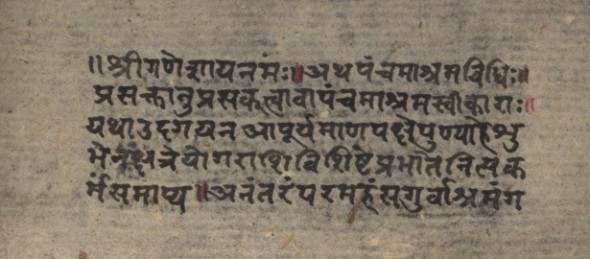
Pañcamāśramanirūpaṇa describes the acceptance of the fifth āśrama — the renunciate stage — with its auspicious timing, its fire ritual, and its final leaving behind of the world.


This Sanskrit manuscript presents a detailed ritual manual (vidhi) for the fifth stage of life (pañcamāśrama), a rare and advanced ascetic state beyond the traditional four āśramas, attributed to the authority Viśveśvara. The text prescribes elaborate initiation rites including the ceremonial abandonment of the sacred fire (agni), the cutting of the śikhā (tuft of hair), and the surrender of all external symbols such as the staff (daṇḍa), water-pot (kamaṇḍalu), and garments, culminating in the state of the avadhūta—one who is digambara (sky-clad), nirliṅga (without marks), and utterly detached from all saṅkalpa (volition). The manuscript's significance lies in its preservation of esoteric post-Vedic ascetic practices and its explicit articulation of a fifth āśrama, challenging the standard Brahmanical framework while integrating tantric and Vedāntic elements through its mantras and meditative disciplines.