VyakaranaJuly 16, 2026
The Roots of a Language: The Dhātupāṭha
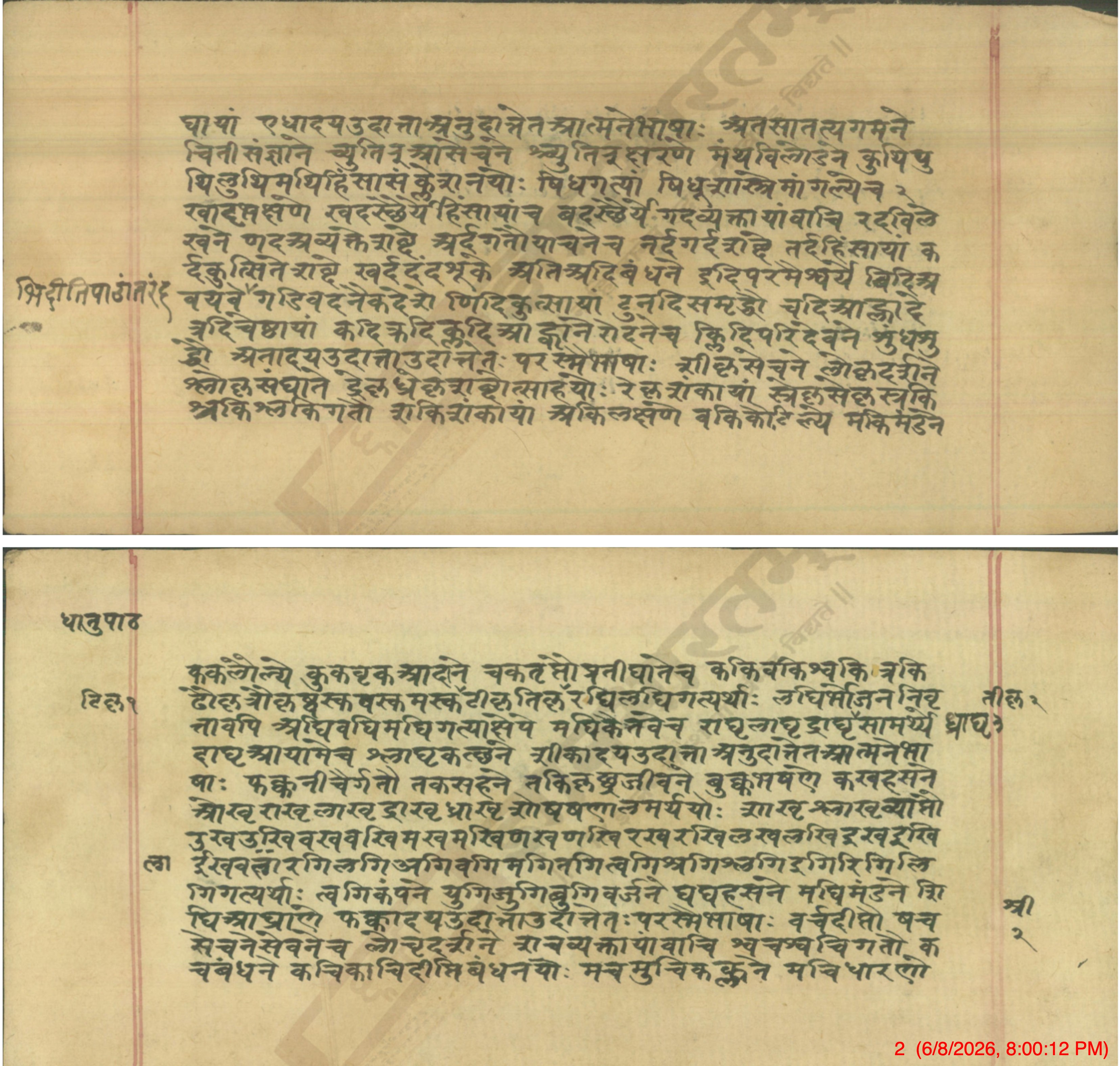
The Dhātupāṭha is Pāṇini's list of verbal roots — aj for going, bhṛj for roasting, śuc for sorrow — the raw material from which all Sanskrit words are generated.

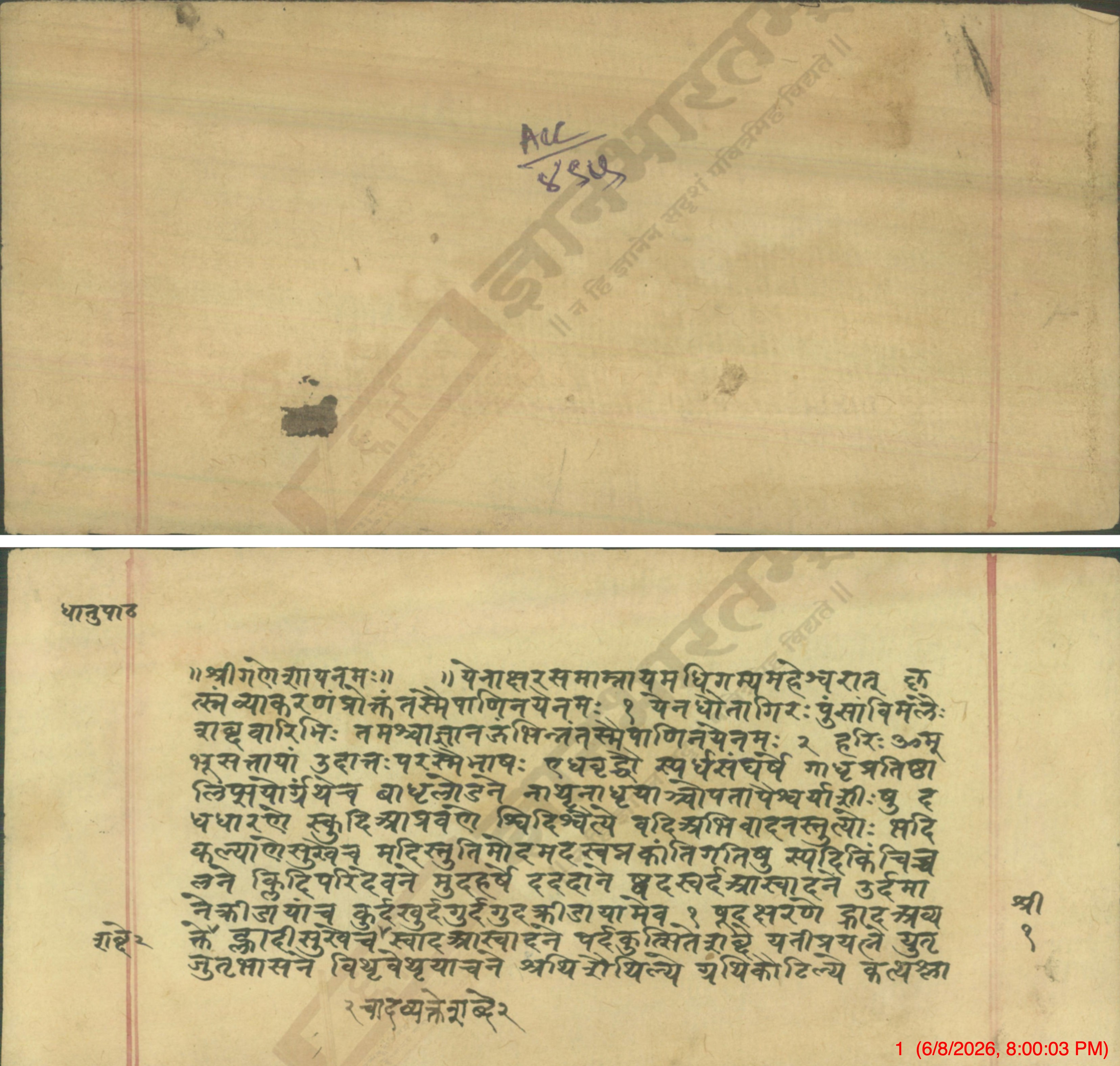
This Sanskrit manuscript fragment presents a highly specialized grammatical treatise, likely belonging to the Pāṇinian tradition of vyākaraṇa (linguistic analysis), as evidenced by its systematic enumeration of verbal roots (dhātus) with their semantic classifications and accentuation patterns. The text exhibits distinctive features of classical Sanskrit grammatical literature, including metrical verses (ślokas) interspersed with technical prose, and demonstrates sophisticated engagement with phonological rules governing udātta (acute) and anudātta (grave) accents in ātmanepada and parasmaipada verbal formations. Notable is the presence of repetitive structural patterns and root lists organized by semantic categories—such as motion (gati), sound (śabda), light (dīpti), and play (krīḍā)—which reflect the analytical methodology characteristic of ancient Indian linguistic science. The manuscript's corrupted transmission, with numerous orthographic irregularities and lacunae, nonetheless preserves valuable evidence for the study of medieval Sanskrit grammatical pedagogy and the regional textual traditions of vyākaraṇa scholarship.