AyurvedaSeptember 14, 2025
Reading the Pulse, Naming the Fever: Haṁsarāja's Manual
Haṁsarāja's 1945 treatise pairs nāḍī pulse examination with a fever nosology, preserved at the Rajasthan Prachyavidya Pratishthan in Jodhpur.

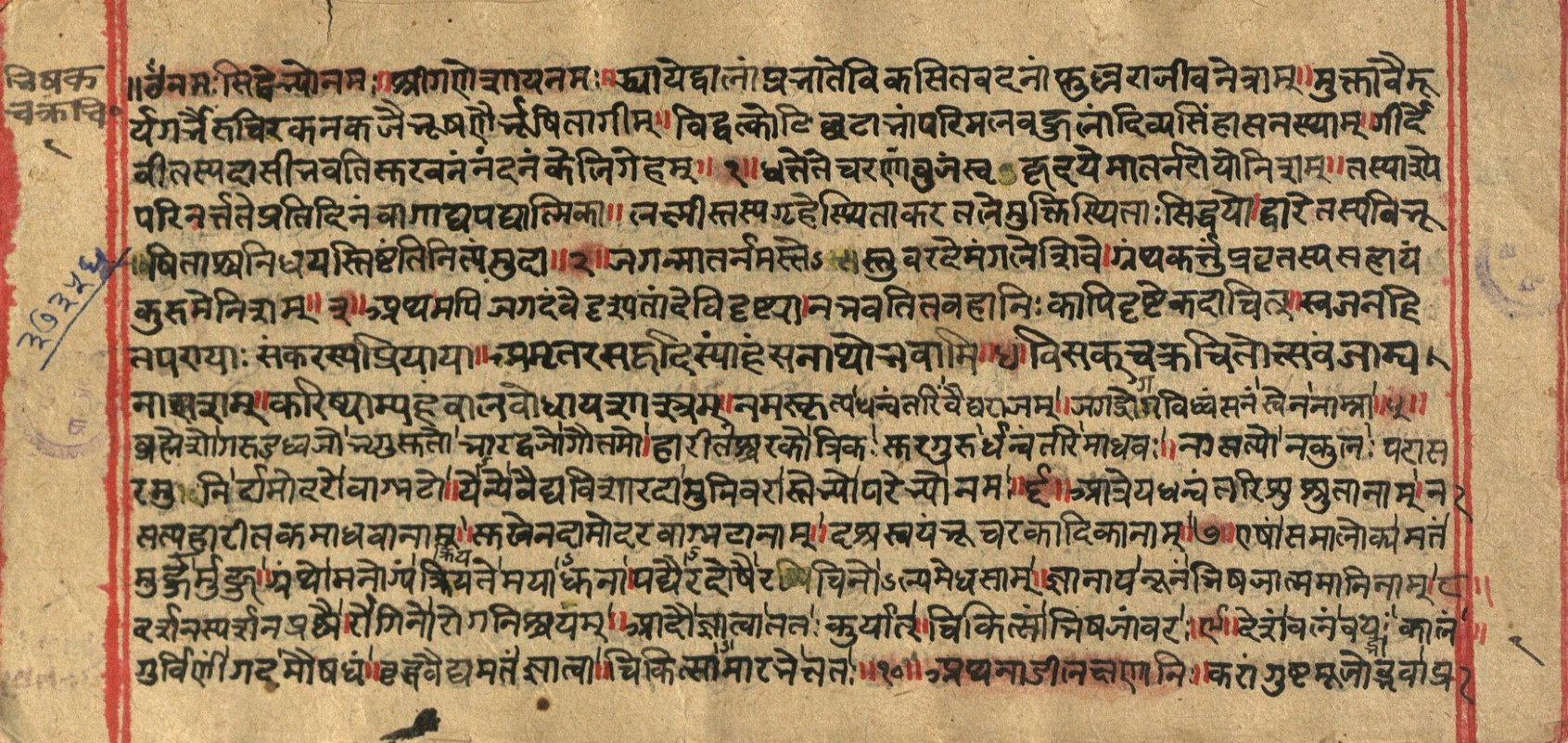
![[No text present]](https://gyan-bhandaar-manuscripts.s3.ap-south-1.amazonaws.com/manuscripts/102_a89dd712-492a-4bb2-9ef4-d7872d8a1fcf/pages/01/image.jpg)
This 1945 Sanskrit manuscript, titled *Bhṣak Cakra Cittotsava* by Haṃsarāja, is an Ayurvedic medical treatise preserved at the Rajasthan Prachyavidya Pratishthan, Jodhpur. The text presents a systematic exposition of diagnostic and therapeutic principles, with particular emphasis on nāḍī-parīkṣā (pulse examination) as a foundational diagnostic tool, wherein the author delineates the characteristic movements of the vāta, pitta, and kapha pulses through elaborate similes drawn from avian locomotion. The work further classifies fevers (jvara) according to their doshic etiologies, providing detailed lakṣaṇas (symptomatology) for vātajvara, pittajvara, śleṣmajvara, and their various combinations (sannipāta). Notably, the text synthesizes authoritative teachings from the classical triumvirate of Caraka, Suśruta, and Vāgbhaṭa while aspiring to pedagogical clarity (*bālabodhāya*) through its versified composition, as explicitly stated in the author's prefatory verses.