AyurvedaDecember 02, 2025
The Gravest Fever: Sannipāta and Its Critical Days
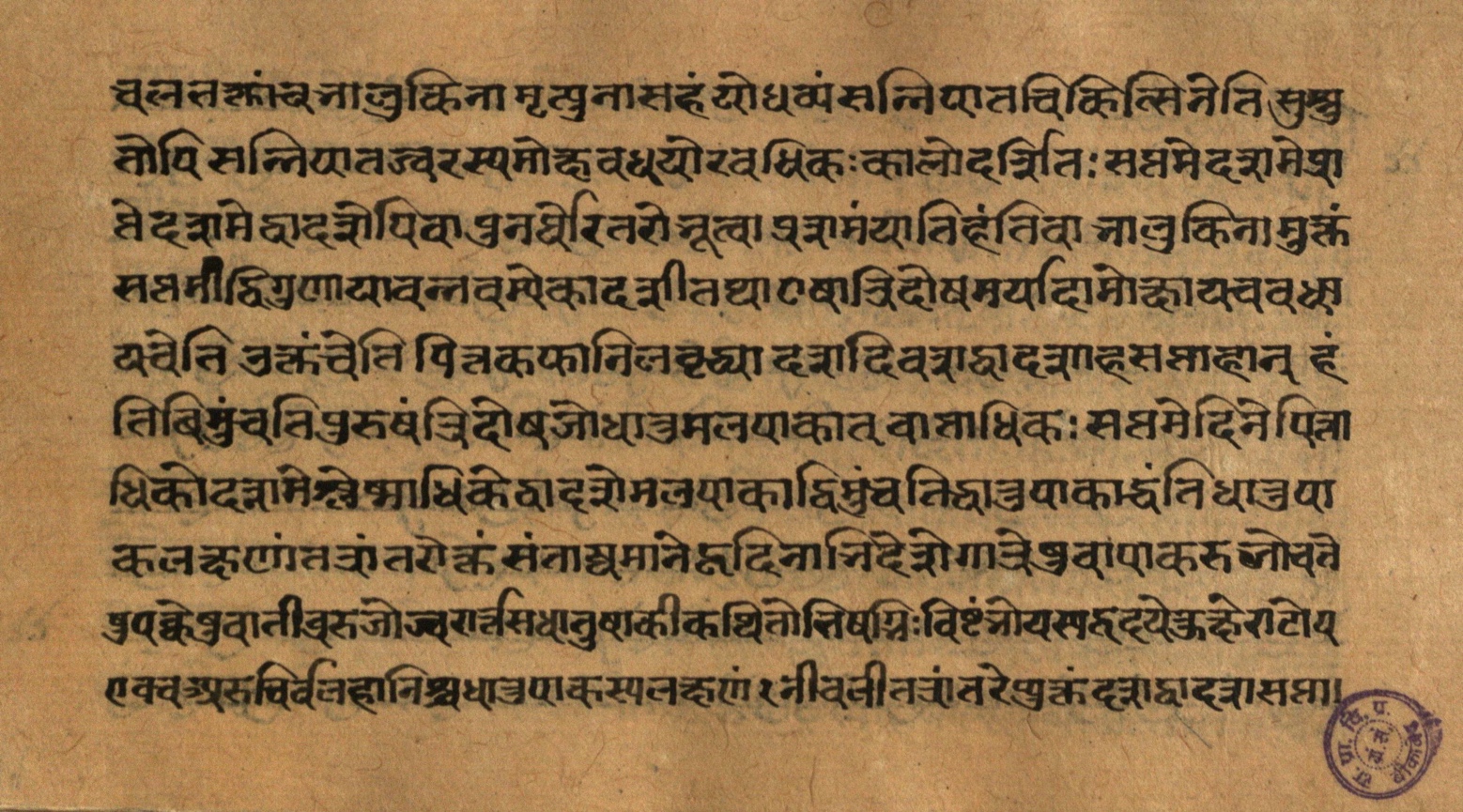
Ātaṅkadarpaṇanidāna, a 19th-century Rajasthani fever manual, charts sannipāta — fever of all three doṣas — and its critical seventh, tenth, eleventh, and twelfth days.

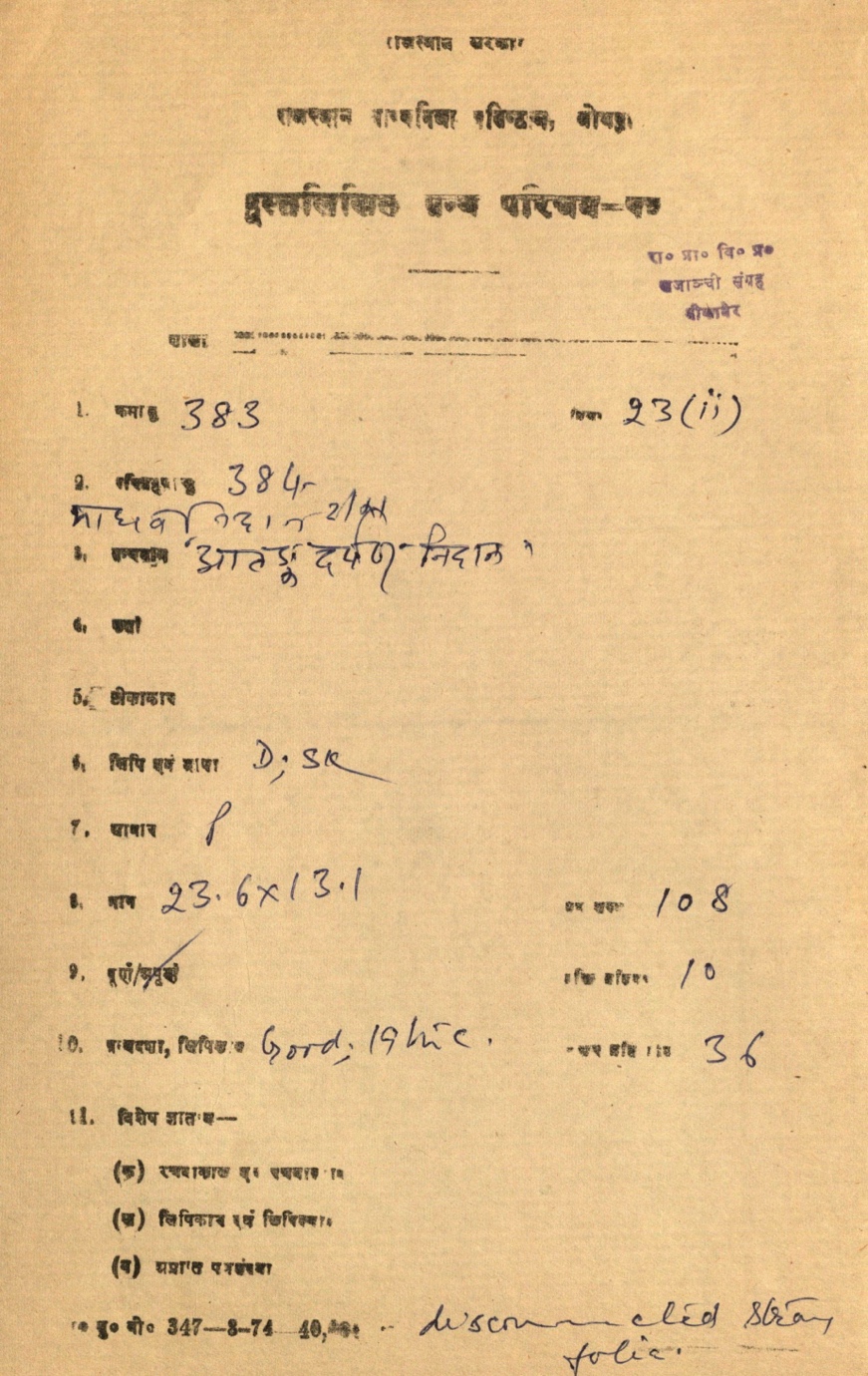
This manuscript represents a 19th-century handwritten catalog entry from the Rajasthan Oriental Research Institute, documenting an Ayurvedic medical treatise titled *Ātaṅkadarpaṇa Nidāna* (alternatively noted as *Mādhavanidāna Ṭīkā*). The text focuses on *sannipāta-jvara* (tridoshic fevers) and their complex symptomatology, diagnostic criteria, and prognostic indicators, reflecting advanced classical Ayurvedic nosology. Written in Devanagari script with Sanskrit terminology, the fragment preserves detailed discussions on dosha interactions, pathological manifestations, and therapeutic challenges, including distinctions between curable, difficult-to-treat, and incurable conditions. Its significance lies in its preservation of nuanced Ayurvedic epistemology, particularly the interplay of *vāta*, *pitta*, and *kapha* in febrile disorders, alongside references to authoritative sources like the *Suśruta Saṃhitā* and *Navanīta Tantra*.