
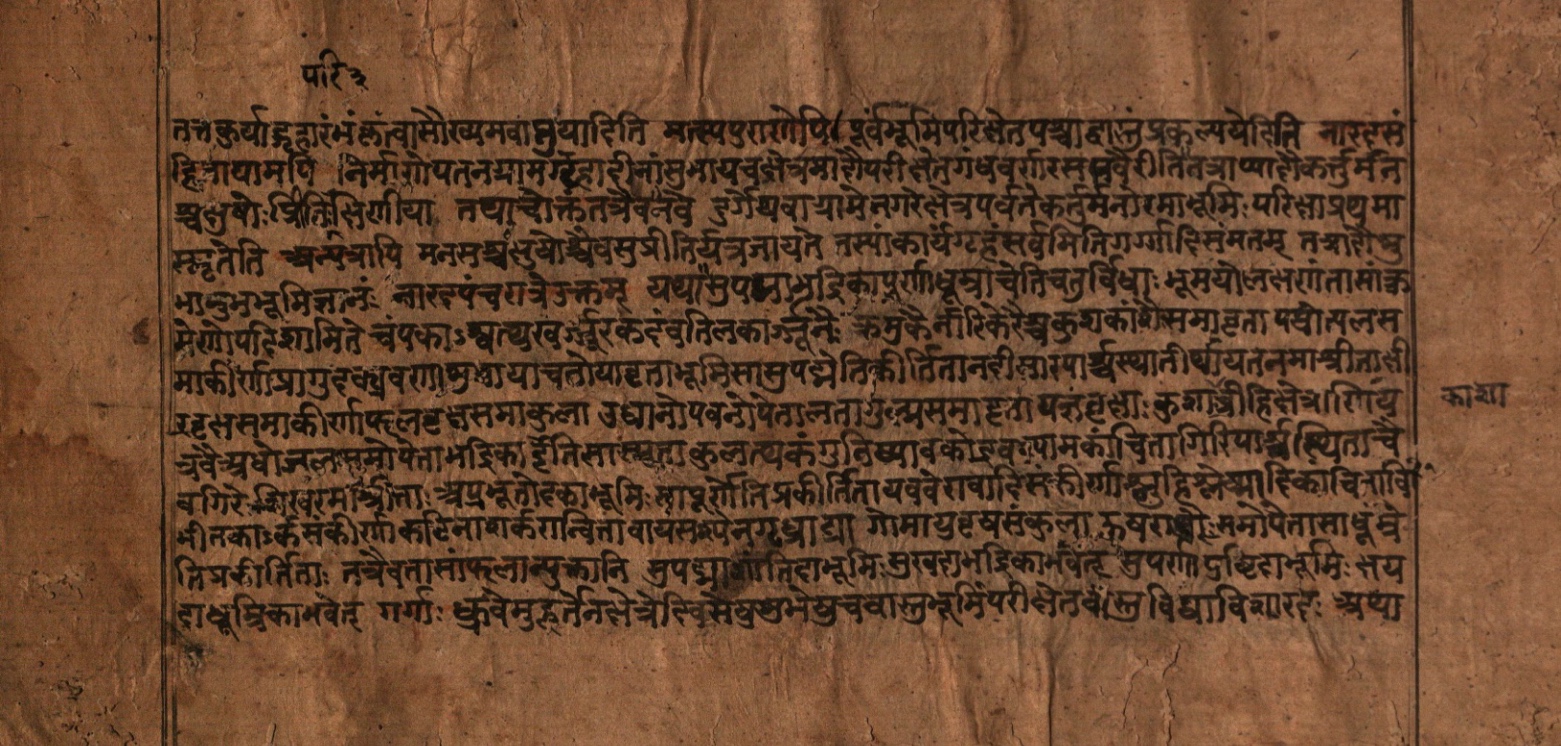
Every building begins with a decision about the ground. The Vāstuśiromaṇi — the 'crest-jewel of architecture' — is a treatise on that decision, and its third chapter is a lesson in how to read a piece of land before a single stone is laid.
Examine the land first
The text opens its practical teaching by citing the authorities on the order of operations.
One should not begin house construction until one obtains the Maurya (auspicious time), as stated in the Matsya Purāṇa: 'First one should examine the land, then plan the vāstu.' For the construction of cities, villages, houses, etc., by those desiring auspiciousness: first one should examine the land with tests of smell, color, taste, and water.
Four tests — smell, color, taste, and water — a full sensory examination of the site. The ground is read like a patient, with diagnosis before treatment.
The builder's satisfaction
What makes the passage distinctive is what it adds to the technical tests.
There too, first the builder's mental satisfaction should be considered. In a new fort, as in a village, city, field, or town, land pleasing to the builder's mind — this examination is declared to be foremost. Where self-satisfaction arises through conformity with the land, that is the auspicious ground.
The technical tests are not enough; the builder's own sense of rightness is part of the method. Vāstu is a discipline in which feeling and measurement cooperate.
Architecture begins with attention
The Vāstuśiromaṇi is a reminder that the Indian building tradition understood something modern construction often forgets: the relationship with a site begins before design. Smell the earth, taste the water, look at the color, and listen to your own satisfaction — then build. That is the crest-jewel's first lesson, and this manuscript preserves it.