
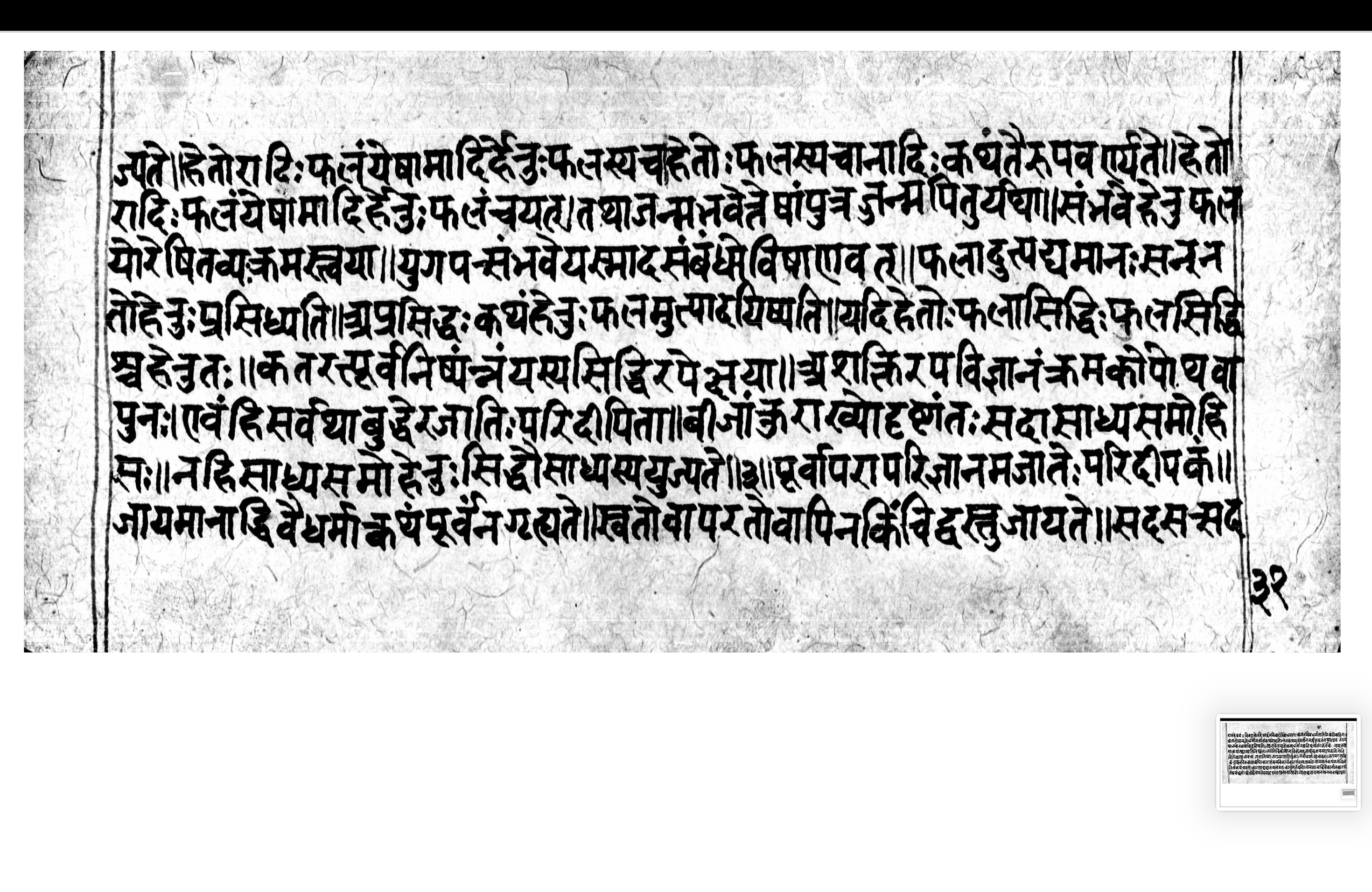
Gauḍapāda, the teacher's teacher of the Advaita tradition, gave the fourth chapter of his Kārikā a strange title: the Ālātaśānti, 'the quenching of the firebrand.' A firebrand swung in the dark traces a circle of light that was never really there — and for Gauḍapāda, that is the perfect image of causation itself.
The mind alone binds and frees
The chapter opens with the famous declaration about the mind.
I bow to that supreme Reality, the means of liberation, which is imagined by the ignorant as various, but which is known by the knowers of the Self as non-dual Consciousness. The mind is the only cause of bondage and liberation; when attached to objects it leads to bondage, when free from objects it leads to liberation.
Bondage is not a place — it is attention. The mind gripping objects is bound; the mind released is free.
The puzzle of cause and effect
The chapter then turns to one of the sharpest arguments in Indian philosophy: the critique of causation itself. If cause and effect arise together, they have no connection; if one precedes the other, neither is truly a cause.
If cause and effect arise simultaneously, their connection would be like that of the horns of a hare. If the effect exists before the cause, then the cause would be known as non-cause. Without a cause, how could a cause produce an effect? If the existence of the effect is established from the cause, and the existence of the cause from the effect — which of these two is established first?
The argument dismantles the very idea of production — and with it, the reality of a world that appears to be produced.
The firebrand's circle
Hence the title. The world of causes and effects is like the circle of fire traced by a swung brand — it looks continuous, looks caused, but the fire was never a ring. This manuscript, a copy of the Ālātaśāntiprakaraṇa, preserves that radical teaching: reality is unborn, and liberation is simply seeing the firebrand for what it is.