
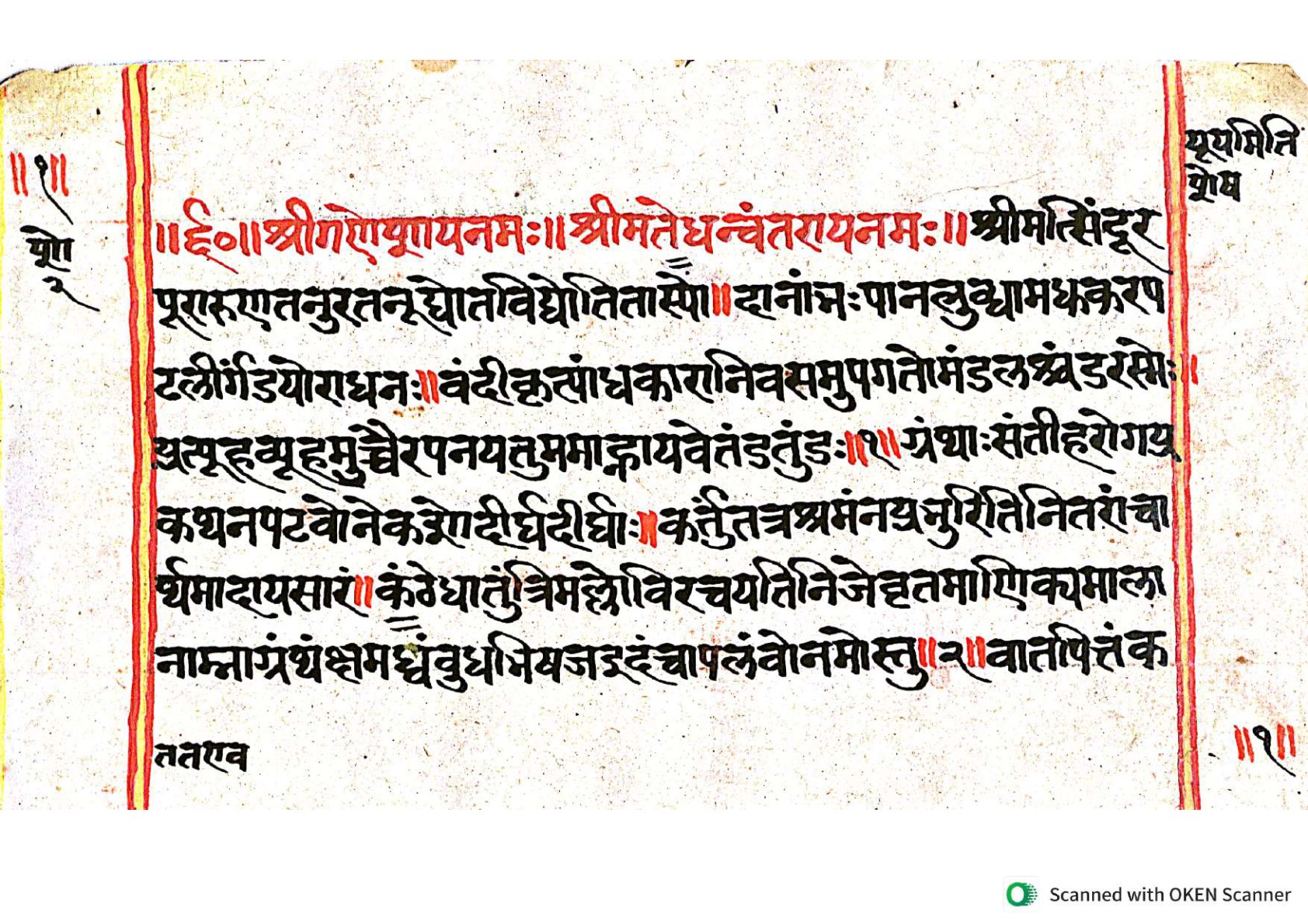
Vṛttamāṇikyamālā
This Sanskrit manuscript presents a classical Ayurvedic medical treatise on the pathogenesis and symptomatology of tridoṣic disorders, specifically focusing on the etiology, progression, and manifestations of fever (jvara) and the derangement of vāta, pitta, and kapha. The text systematically delineates the causes of doṣic aggravation and depletion, the sequential formation of bodily tissues (dhātu), and the complex symptom clusters (samprāpti) arising from single, dual, or triple doṣic imbalances. Notable features include detailed verses on prodromal symptoms (pūvarūpa) of fever, the twenty varieties of doṣic combinations, and the distinctive signs of vātaja, paititka, and kaphaja fevers, reflecting sophisticated diagnostic taxonomy characteristic of classical Indian medicine. The invocation to Dhanvantari and Gaṇeśa, along with the self-referential verse identifying the work as Vṛttamāṇikyamālā composed by Trimalla, situates this text within the scholarly medical tradition of early modern India.