
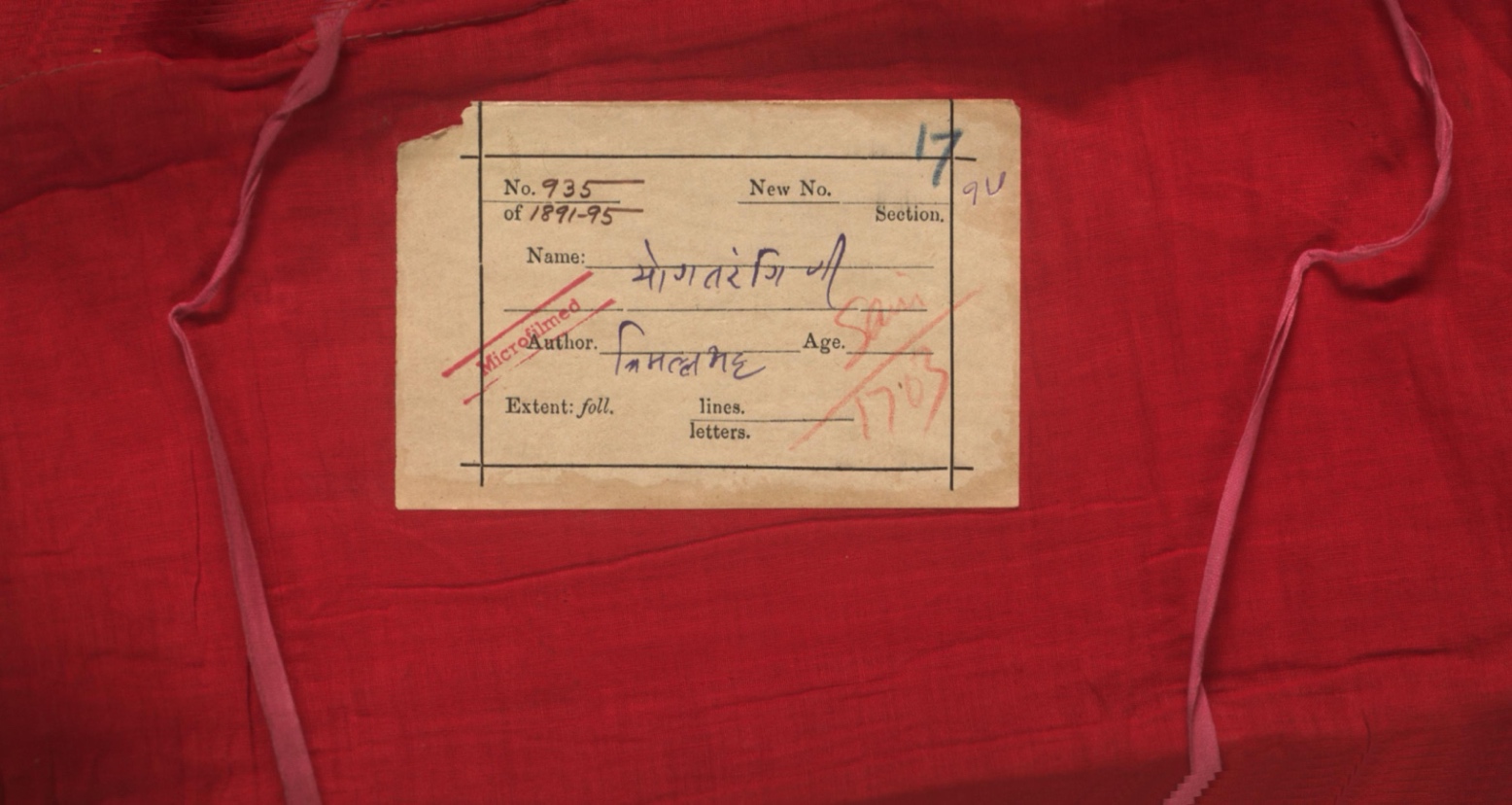
Laghuyogataraṅgiṇī
This manuscript preserves the *Yogataraṅgiṇī*, a Sanskrit medical treatise (*cikitsā*) composed by Trimallabhaṭṭa in Samvat 1703 (c. 1646 CE), belonging to the Tailaṅga family of physicians with ancestral ties to Kāśī. The text exemplifies classical Āyurvedic scholarship, integrating theoretical frameworks of doṣa (vāta, pitta, kapha) pathology with practical therapeutics, and explicitly addresses the four puruṣārthas—demonstrating medicine's soteriological significance. Notable features include its metrical verses, systematic exposition of diagnostic methods (darśana, sparśana, praśna), and ethical injunctions regarding physician conduct and the spiritual dimensions of healing. The colophon identifies this as the *Laghu-Yogataraṅgiṇī*, suggesting an abridged recension derived from larger compendia (*bhūrigraṃthebhyaḥ*), and reflects the cosmopolitan medical culture of early modern South India.