
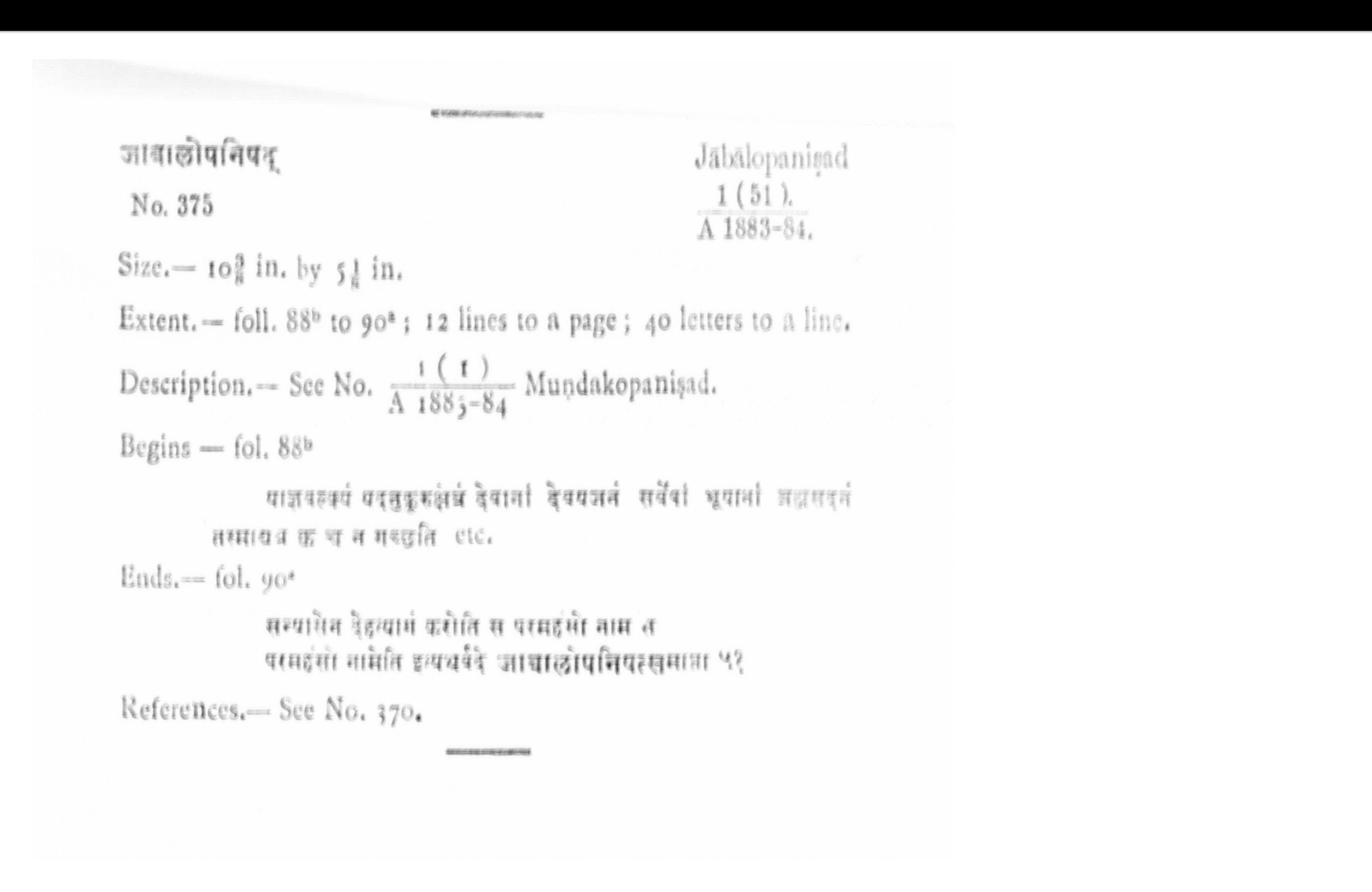
Jābālopaniṣad
This Sanskrit manuscript fragment preserves portions of two significant Upaniṣadic texts—the Jābāla Upaniṣad and the Kaivalya Upaniṣad—interspersed with extensive Vedāntic commentary. The text delineates the qualifications and spiritual attainments of the paramahaṃsa sannyāsin, emphasizing the sacred geography of Kurukṣetra as a site of liberation (avimukta), and expounds upon meditative practices leading to kaivalya (absolute aloneness). The commentary employs sophisticated hermeneutical techniques characteristic of medieval Indian scholasticism, including pratinidhi-nyāya (substitution methodology) and reflections on the relationship between vyāvahārika (conventional) and pāramārthika (ultimate) realities. The manuscript exhibits typical features of late medieval or early modern Sanskrit transmission, with phonetic orthographic variants and interlinear glosses suggesting active pedagogical use within a traditional learning environment.