
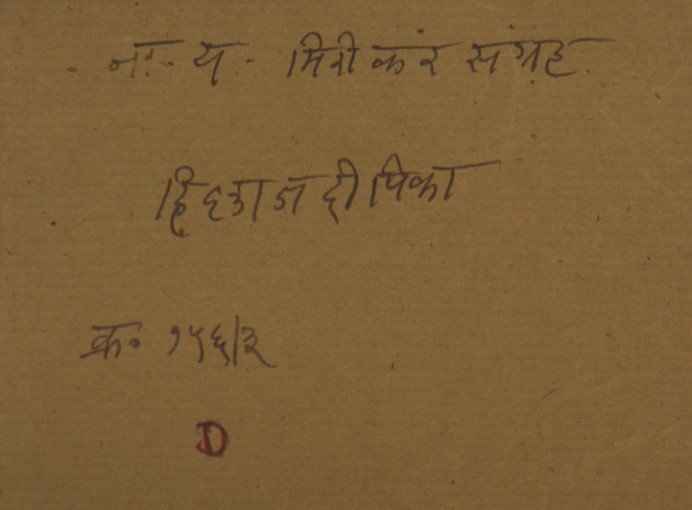
Hillājadīpikā-2
This Sanskrit manuscript, titled *Hillājadīpikā* (The Lamp of Hillāja), constitutes a significant treatise on Jyotiṣa (Indian astrology), specifically focusing on the *Hillāja* method of longevity calculation (*āyurdaya*). The text presents systematic rules for determining life span through planetary positions, particularly emphasizing the Sun's placement relative to the *Puṇya-lagna* and *Vilagna* at full moon, and introduces six categories of longevity from *uttama* (excellent) to *atināṣṭa* (utterly destroyed). The work cites authoritative figures such as Romaka and Śārada, and includes computational verses (*ślokas*) for calculating *dalīlaka* (planetary strength indicators) and their modifications by benefic and malefic influences. The manuscript preserves technical terminology unique to medieval Indian horoscopy, including *īsārāpha*, *musarīpha*, and *dalīlaka* calculations, representing a rare witness to the Hillāja school of astrological prognostication.