
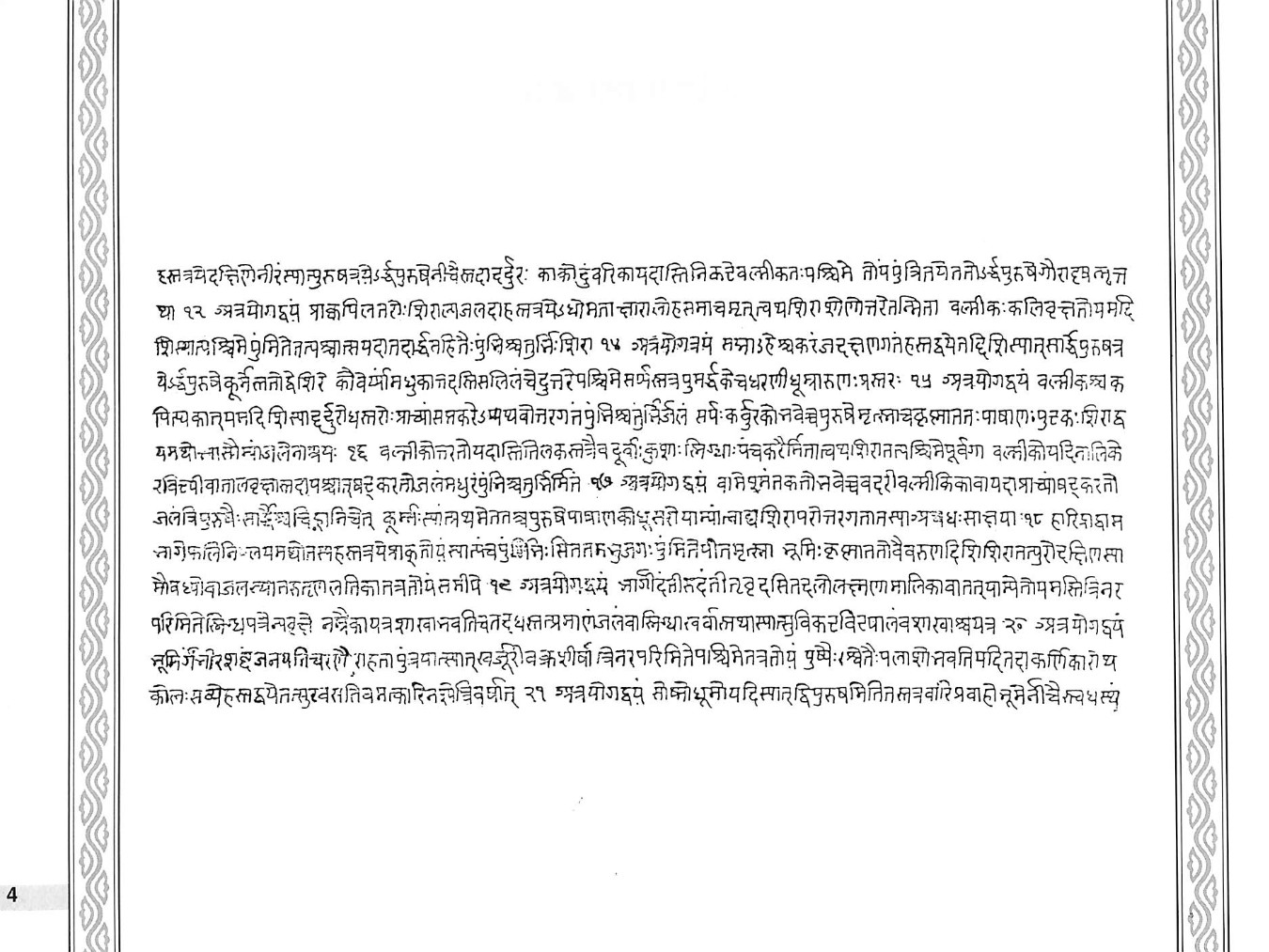
Where is the water? The Viśvavallabha — a treatise on trees, water, and the land — is a manual for answering that question. It reads the ground the way a physician reads a pulse: ant-hills, trees, and the lie of the earth all give signs, and the well-digger who knows them finds water before the first spade falls.
Knowledge as water
The text opens with an image that carries its whole program.
Having bowed to the pair of lotus feet of the best of Raghus and also to the guru, I shall speak accurately. Knowledge is like water, and the hands of that (knowledge) are for planting the trees of proper conduct. As long as water remains in its natural source, supported by the earth, and is increased by favorable signs — that which is hard like stone becomes sweet, very sweet sugar at the bottom.
Knowledge and water are the same substance in this image — both hidden, both waiting to be found, both turning the hard world sweet.
The signs of hidden springs
The practice is precise: a catalogue of landmarks that reveal water.
At a distance of three hastas to the right is a pool; a post stands there, six hastas away; a crow is near; from the west of an ant-hill, water flows. East of a jujube tree, water is saline; below are three signs: saline, iron-colored, and then with sirisha flowers to the north; from there an ant-hill; black and white; from there a man.
The ant-hill, the jujube, the crow, the color of the soil — the land is legible, and the treatise teaches its alphabet.
A science of survival
Viśvavallabha belongs to krishiśāstra — the science of agriculture and water — the most practical branch of the tradition. In a land of monsoons and wells, finding water was a skill with a civilization's weight behind it, and this manuscript preserves that skill's textbook: where to look, what to trust, and how to read the earth's own testimony about the water it holds.