
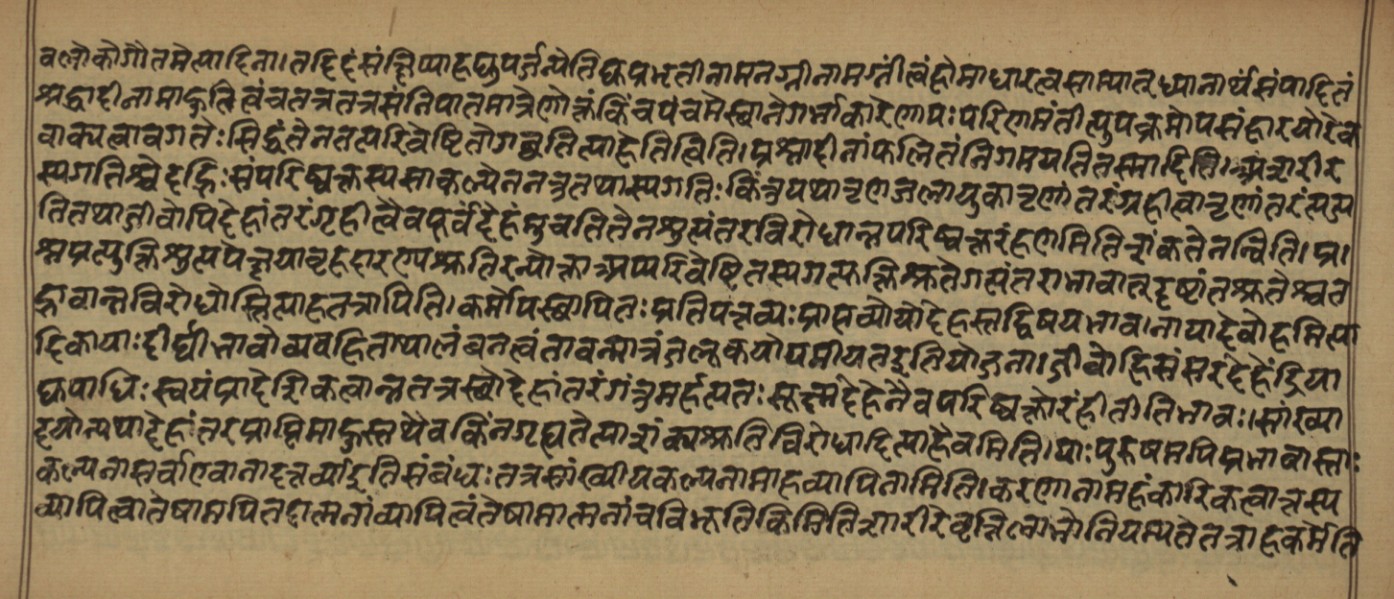
What happens between one body and the next? The Śārīrabhāṣyaṭīkā — a commentary in the Vedānta tradition on the science of the body — takes up exactly that question: the journey of the jīva, the soul, as it leaves one body and enters another.
The jīva in the interval
The text opens with the soul's equipment and its movement between births.
After determining the birth, etc., of the jīva, which is equipped with the subtle and gross elements as its instruments, in order to describe the manner of the jīva's transmigration, it goes together with that which embraces it at the beginning of another body — this is the purport; therefore, 'in the interval.'
The soul does not travel naked — it carries its subtle and gross elements as instruments, and it is joined by what embraces it at the threshold of the next body. The 'interval' between lives is itself a state to be described.
The sheaths of the body
The commentary works through the traditional anatomy of the person — the sheaths (kośas) that wrap the self.
The sheath of the vital airs and the rest are to be served. For that is indicated by the Sruti passages 'clinging together' and 'at the extremities of the Sruti.' Because the bodies are two, here and there, by mere association, the world alone is the agent of going around — not that the soul is enveloped by that.
A philosophy that follows the soul
At 307 pages, the Śārīrabhāṣyaṭīkā is a major commentary — the kind of text that worked through every question about the body and the soul with the tools of śruti and reasoning. Its subject is the deepest mystery of the tradition: what travels, what remains, and what happens in the interval between one body and the next.