
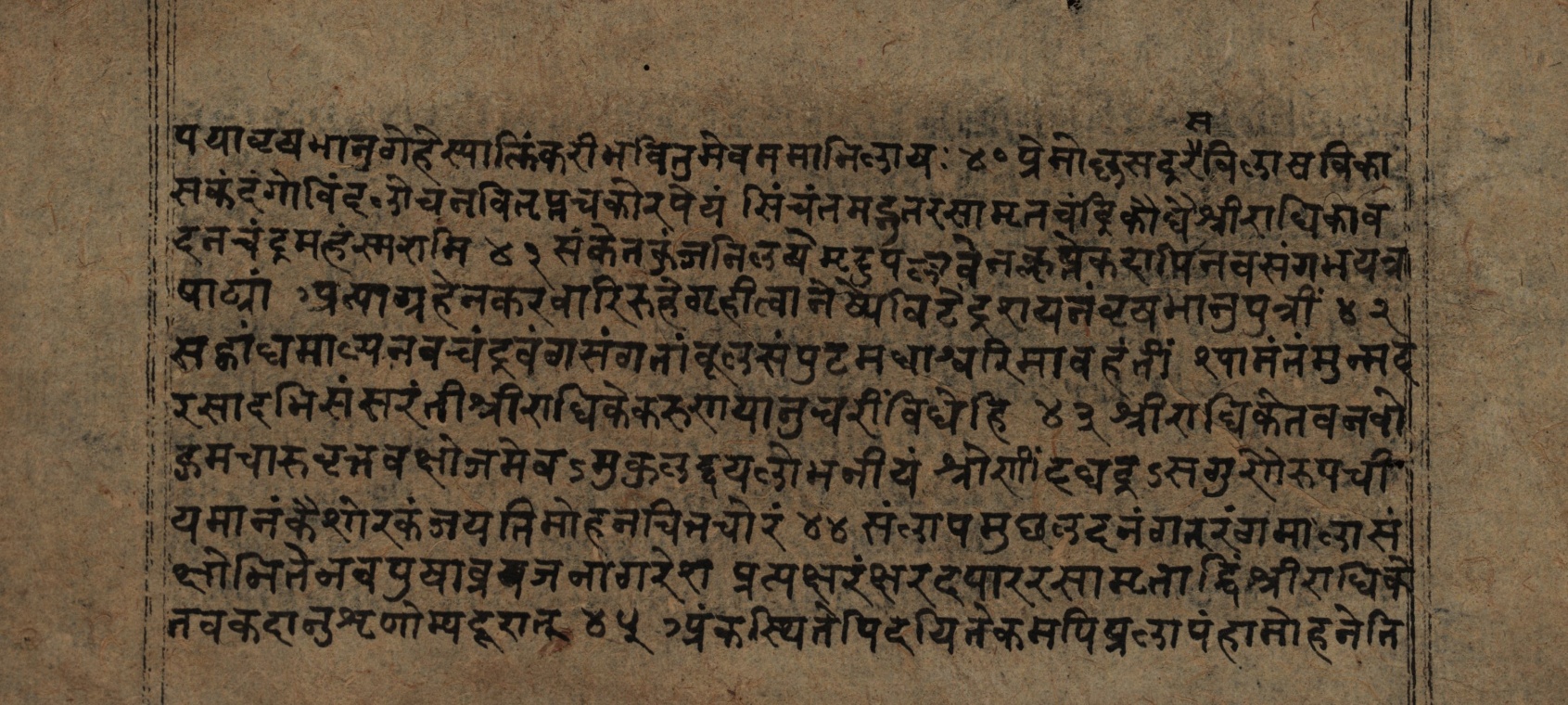
Devotional poetry in Sanskrit often turns worship into a job application — the poet asks, not for wealth, but for the lowest position in the beloved's household. The Rādhāsudhānidhi, a poem by Śrī Vyāsa Kāśīrāma, does exactly that: it praises Rādhā as the embodiment of rasa, and then asks only to serve her.
Rādhā as the essence of rasa
The poem's central image is Rādhā as the embodiment of rasa — the essence of aesthetic and devotional emotion.
For in Radha's face, the essence of the ocean of rasa manifests as the sweet abode of poison. That cuckoo voice of hers, repeatedly calling out to the Supreme Person, the crested one — may I become the sweeper of the courtyard of the pleasure-grove of that Vrishabhanu's daughter, who is the treasure of the essence of rasa.
The paradox is deliberate — the 'sweet abode of poison' is the beauty that intoxicates and transforms. And the poet's response is immediate: let me sweep the courtyard.
The wish to serve
The poem returns again and again to that wish — not to be Rādhā's equal, but to be her servant.
O Vṛṣabhānu's daughter, by your mercy I desire to become a maidservant in your household. I meditate upon Śrī Rādhikā's moon-like face, which is a cakora bird enchanted by Govinda's lotus eyes, which showers the nectar-moonlight of wonderful rasa. Make me, O Śrī Rādhikā, an attendant by your mercy, who carries her own garland, fresh sandalwood paste, and a wonderful box of betel.
The theology of the servant
The maidservant wish is not humility as performance — it is the devotional logic of the tradition: the closest one can come to the divine is not to possess it, but to be allowed to serve it. The Rādhāsudhānidhi makes that theology lyrical, and this manuscript preserves its fifth book — a poem where longing itself becomes worship.