
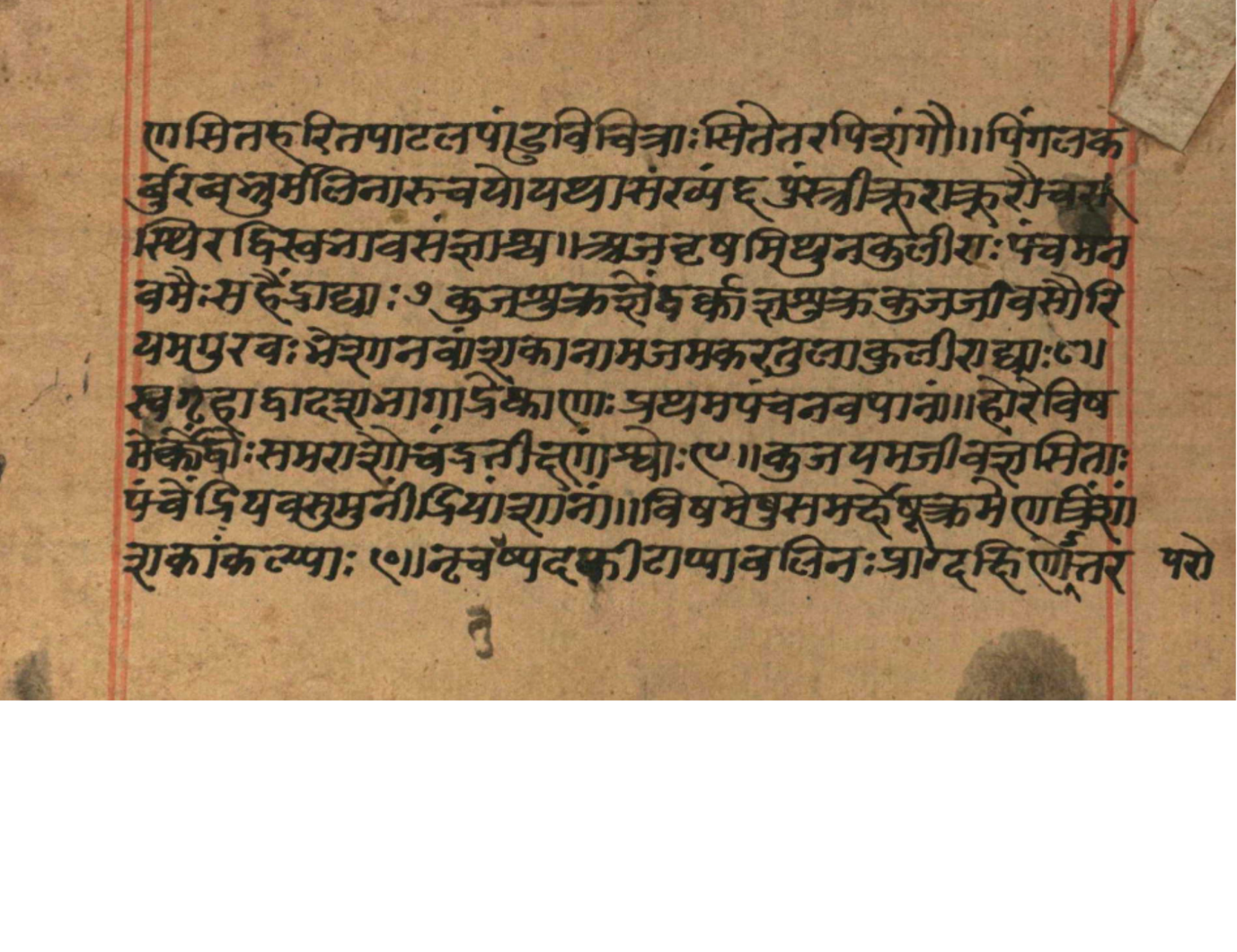
The Laghujātaka of Varāhamihira opens with a striking image: the zodiac is a body, and the signs are its limbs. Aries is the head, Taurus the face, and the list runs down through arms, heart, belly, hips, and knees until Pisces stands for the feet. The sixth-century astrologer-astronomer is not being poetic for its own sake — he is giving students a memory map for the entire chart.
The body of the zodiac
From the opening chapter of this manuscript of the Laghujātaka (the 'Short Jātaka'), the correspondence is stated directly, and immediately put to work.
The head, face, arms, heart, belly, hips, bladder, secret part, thighs, knees, shanks, and feet — these are the signs beginning with the zodiacal signs. One should consider the limbs of the Time-Person and of men at the time of birth; they are nourished or afflicted according to the conjunction of good or evil planets.
Because each sign rules a part of the body, a planet's placement tells you which limb is nourished and which is afflicted. The chart becomes a diagnostic diagram of the person it describes.
The twelve signs and their temperaments
Varāhamihira then classifies the signs the way a naturalist would: some are quadruped, some biped, some insects, some water-dwellers, and each carries a planet and a direction.
Aries, Taurus, Leo, and the first half of Capricorn are quadrupeds; the second half of Capricorn is an insect; Cancer is a reptile; Scorpio is declared [as such].
This is not arbitrary symbolism — the temperament of the sign shapes how its planets behave. A malefic in a fixed, quadruped sign works differently from one in a watery, mutable sign, and the text's whole system of strengths and friendships depends on getting these classifications right.
An essence in Āryā verses
Varāhamihira says he examined the śāstras and condensed their essence into Āryā meter, calling the result 'a lamp in darkness' that reveals the accumulated karma of previous births. This manuscript is a window into how that famous condensation was copied and preserved — a compact, memorizable guide to reading a life from the sky.