
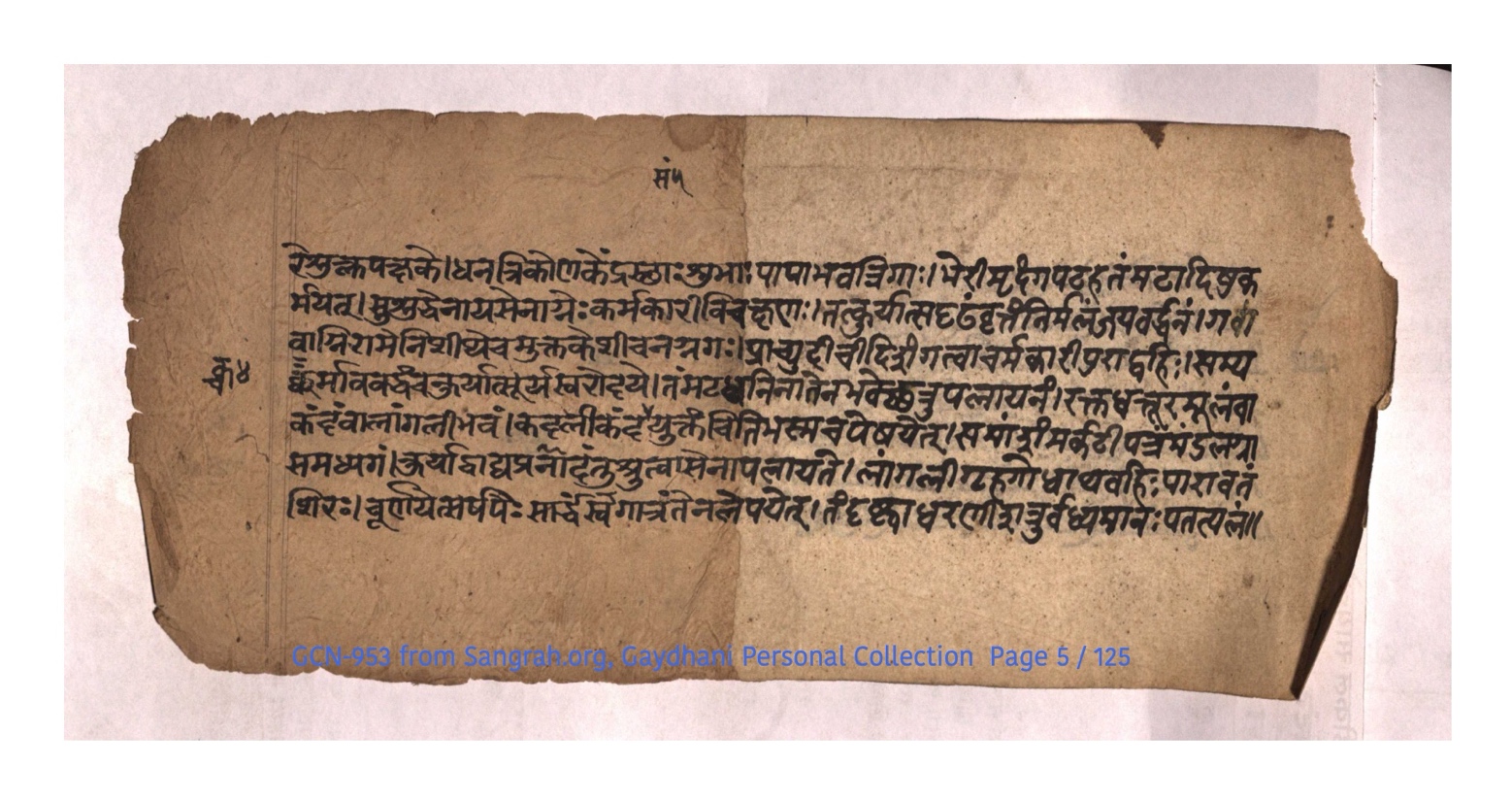
What does a king do when the wars are won? The Kautukacintāmaṇi — 'the jewel of curiosities' — has an answer. It is a manual of royal leisure, a collection of the amusements, rites, and marvels that filled a court at peace, and its opening declares the whole premise: a king who has conquered the directions should pass his time in entertainment.
Leisure after conquest
The text's frame is political — entertainment as the proper occupation of a settled king.
It was previously stated by the wise that a king who has conquered the directions and established stability in his kingdom through the application of political medicine should pass his time merely by observing entertainment.
The phrase 'political medicine' (nīti-rasāyana) is deliberate: the text is the aftercare for a king who has finished the hard work of conquest.
The substance of amusement
What follows is a sampler of the curious — rites for the bright fortnight of Kārtika, the sounds of drums and mṛdaṅgas, midnight observances with loosened hair, and formulas involving the root of red dhattūra.
On the bright fortnight of the month of Kārtika. When benefic planets aspect the trine of wealth from the ascendant, they become malefic. The sound of kettle-drums, mṛdaṅgas, paṭahas, and tambourines. The executioner of the army of the sleeping lord is terrifying. One should perform with companions the pure increase of muttering. In a cow-shed or at midnight, with loosened hair, wandering in the forest.
A window into the court's inner life
The Kautukacintāmaṇi is a rare survival — not a treatise on statecraft or religion, but on the space between, where a king amused himself. It preserves the texture of court life: the drums, the rites, the curiosities, the small magics. It is the 'miscellaneous' category of its own era, and for that very reason, invaluable.