
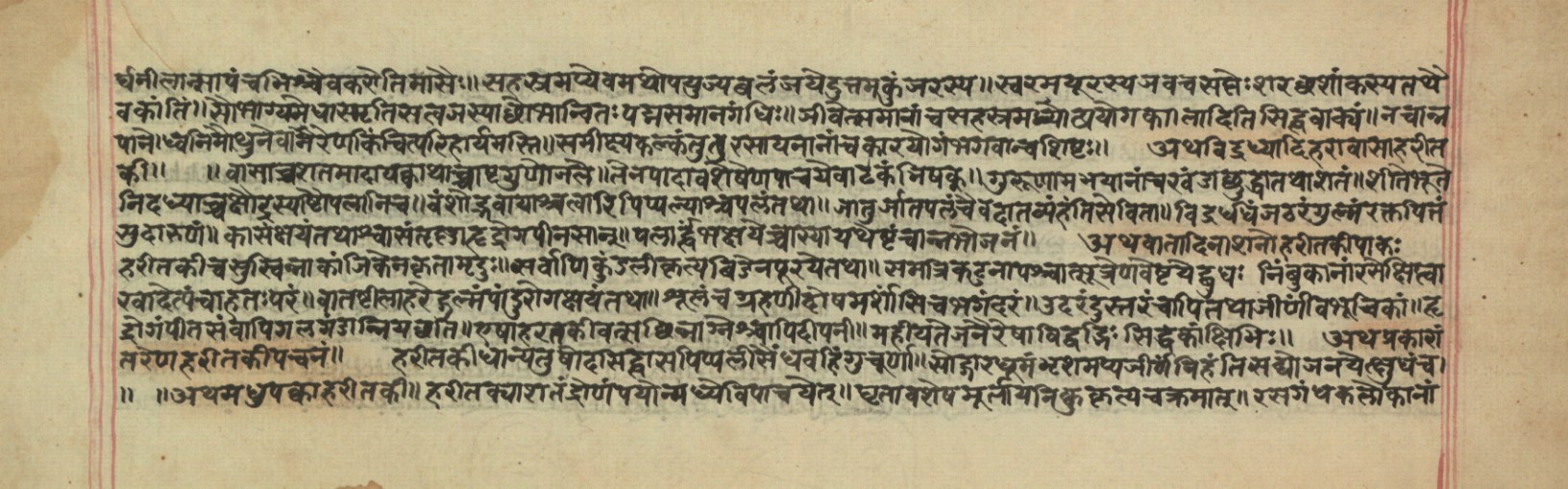
Terminalia chebula — harītakī, pathyā, jaya — is the most versatile fruit in the Ayurvedic pharmacopeia. The Harītakī-prayoga, a five-folio manuscript catalogued as number 14 in the Poona University Collection at the Bhandarkar Oriental Research Institute, is devoted entirely to its preparations.
The text opens with formulations drawn from the Dhanvantari Saṃhitā. The first is a complex preparation for strengthening digestion: harītakī soaked in ocean water, boiled with daśamūla, triśigru, granthika, and a battery of salts, then stuffed with a mixture of pippalī and other herbs and cooked in lemon juice. The manuscript attaches this recipe to the legendary figures Garuḍa, Bhīmasena, and Kumbhakarṇa.
The Honey Preparations
The honey-based forms follow. Madhupakka harītakī — harītakī processed with honey — is prescribed for an extraordinary list of conditions: cough, asthma, consumption, hiccup, vomiting, fainting, liver and spleen disorders, abdominal tumors, irregular fever, dysuria, diabetes, blood disorders, grahaṇī, raktapitta, leprosy, epilepsy, anemia, and jaundice. The text details how to make kṣaudra harītakī by soaking the fruit in honey for a month, and variations cooked with bilva, gokṣura, and eranda for colic and āma-atiśāra.
This harītakī is wholesome and kindles the digestive fire. This is highly valued by people, by the learned, by those desiring perfection.
An Electuary Against Everything
The manuscript's most ambitious formula is the Sarvārogaghni Vāsiṣṭha, a harītakī leha — electuary — meant to be consumed over months to treat diseases generally. Its ingredients run from daśamūla and aśvagandhā to bhallātaka, uśīra, haridrā, and pippalī, cooked in iron vessels with ghee and honey. A separate line of preparations addresses specific organs: dāśāmṛta harītakī for eye diseases including cataract and night blindness, and a decoction of harītakī, ginger, rock salt, long pepper, ajamoda, cumin, and black pepper for gulma, splenic disorders, constipation, and hemorrhoids.
The text closes by attributing the Harītakī-prayoga to Śiva himself, 'Sarvavaidyopānama.' One fruit, dozens of processes, and a claim that borders on the universal — the manuscript is a compact record of how a single botanical substance could anchor an entire therapeutic tradition.