
The vessels of worship have their own science. Gandhottamanirṇaya — 'the determination of the finest fragrances' — is a ritual manual that spends its pages on the objects of worship: the kalasha (jar), its measures, its installation, and the meanings packed into its making.
The jar made by Viśvakarman
The text explains the ritual jar's origin and measurements with the care of a craftsman's manual.
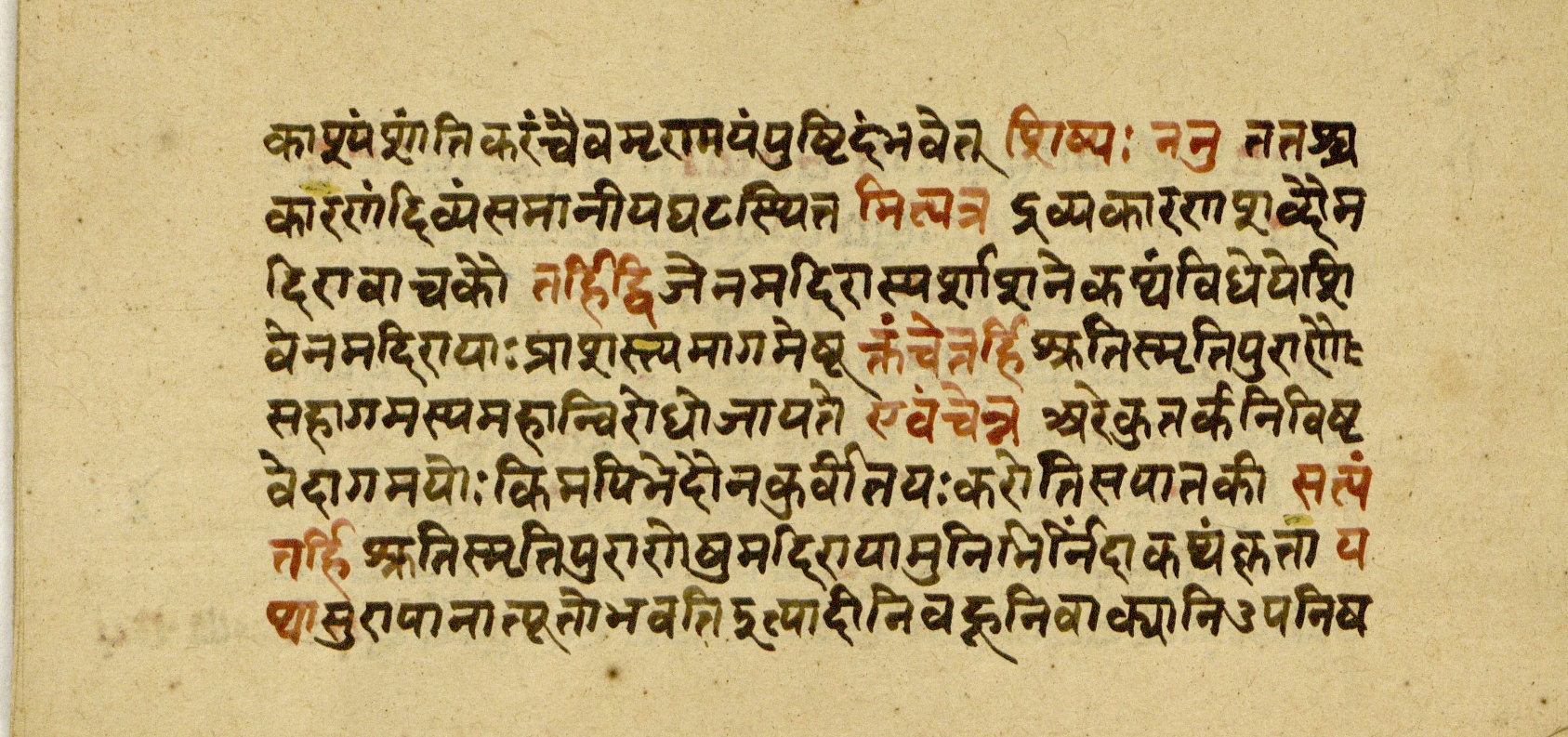
The venerable guru, teaching that method to the disciple, beginning from 'in the brahma muhurta' and narrating up to the general arghya, then says 'one should do the installation in the jar when the sequence is reached.' Its characteristics are stated in another tantra: 'Having taken a part, part by part, this jar was made by Vishvakarman of the gods, therefore it is called kalasha.' Its height is twelve angulas.
The jar has a maker — the architect of the gods — and a measure, twelve aṅgulas, giving the ritual object a precise, divine pedigree.
The defense of the Āgamas
The text also carries a sharp theological argument: are the Veda and the Āgama consistent? The question arises because the ritual involves substances the orthodox might question.
If the excellence of liquor is stated by Shiva in the Agamas, then there arises a great contradiction between the Agamas and the Sruti, Smriti, and Puranas. If so, no — O you who are fixed in false logic — there is no difference whatsoever between the Vedas and the Agamas. Whoever makes [a distinction] is [mistaken].
Ritual as a reasoned practice
What is striking about Gandhottamanirṇaya is how argumentative it is. A ritual manual, one might expect, would simply instruct. This one defends — the measure of the jar, the consistency of the scriptures, the legitimacy of the rite. It is a reminder that the ritual tradition was also a rational tradition, where every practice could be questioned, and every answer had to be argued for.