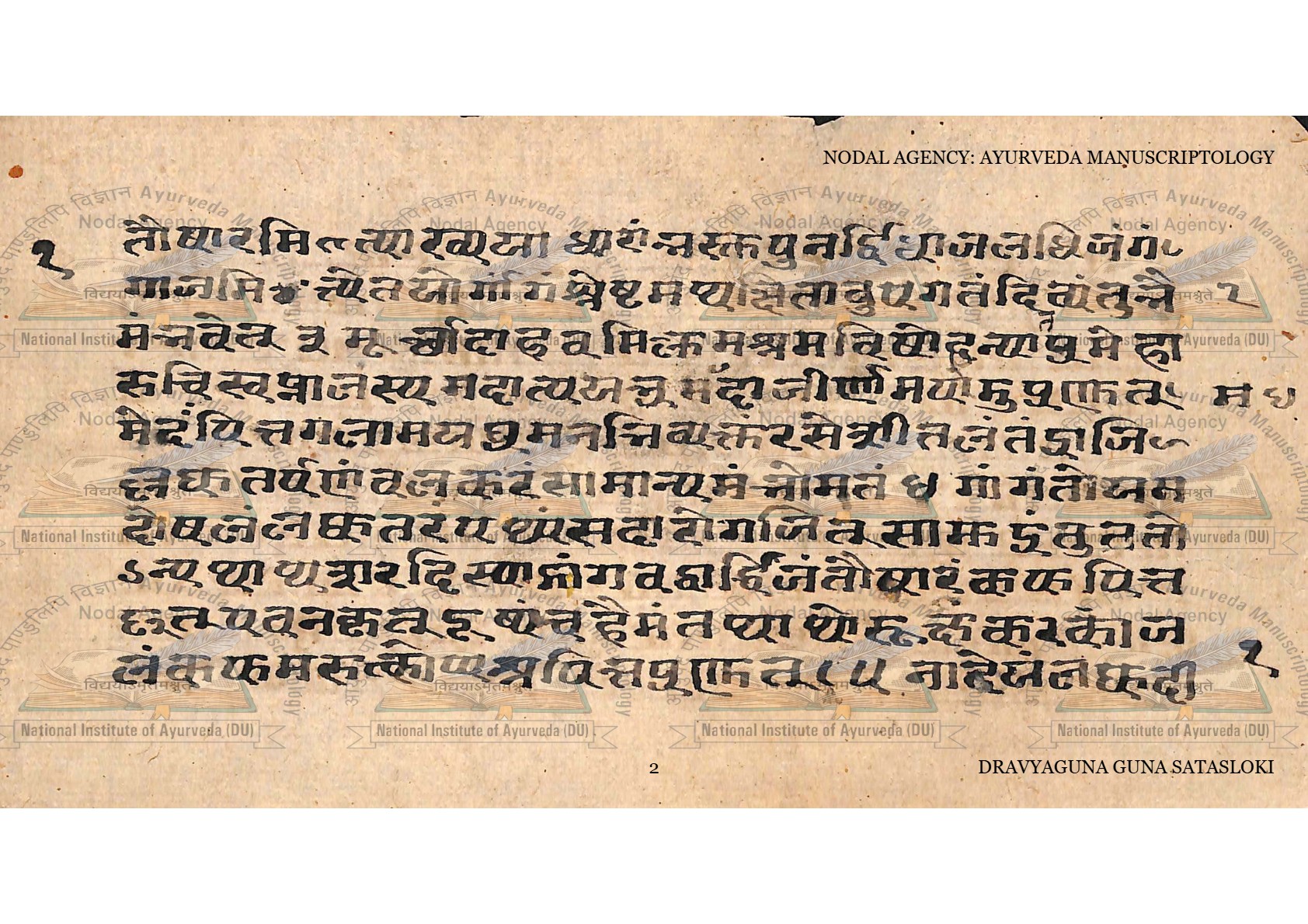
Some Ayurvedic texts are vast hospitals; others are a pantry. The Dravyaguṇa Śataślokī by Trimalla is the latter — a verse compendium of the properties (guṇa) of substances (dravya), arranged for easy recall. Its thirty-two folios, scribed by Lakṣī Nārāyaṇa and preserved by the Swami Lakshmiram Trust, classify the everyday world into medicine.
The text opens with the six tastes — sweet, sour, salty, pungent, bitter, and astringent — and their effects on the three doṣas. Sweet, sour, and salty destroy vāta while building kapha; pungent, bitter, and astringent do the reverse. From that foundation, Trimalla walks through water, milk, grains, meats, vegetables, fruits, oils, and finally metals.
The Medicine of Water
Water receives a detailed taxonomy. Rainwater is rough, sweet, and cool; Gaṅgā water destroys kapha and vāta; seawater is sharp, alkaline, and tridoṣic; well water is heavy and pitta-aggravating. Hot spring water is phlegmatic and rough. The text prescribes specific waters for conditions from fever and fainting to diabetes and asthma, and warns that sea water and rainy-season water aggravate kapha and pitta.
Gangā water is phlegm-dose-causing, always disease-conquering; sea water is to be avoided.
Milk, Ghee, and the Dairy Shelf
Dairy is treated with equal precision. Cow's milk is a rejuvenative that treats cough, asthma, fever, and bleeding disorders while promoting strength and intellect; goat's milk alleviates consumption and diarrhea but increases wind and phlegm. Buttermilk, when cold, is tridoṣa-alleviating — otherwise it produces doṣas. Cow ghee conquers all three doṣas, while buffalo ghee is heavy and kapha-increasing, and fresh butter is cooling and blood-pitta-destroying.
From Grains to Gold
The compendium continues through mung beans, wheat, barley, and black gram; meats from deer and blackbuck to tortoise and fish; fruits from mango and grapes to betel nut; and oils of sesame, mustard, and neem. Its final verses reach the metals — gold as cooling and intellect-promoting, silver for pitta and diabetes, iron as aphrodisiac — and close with a benedictory verse praising medicine born from the snowy mountain. The colophon records that the manuscript was written by Lakṣmīnārāyaṇa Goḍa in Samvat 1976, a small signature on a work that turned the entire natural world into a shelf of remedies.