
Some Upaniṣads begin by doubting; the Dhyānabindūpaniṣad begins by promising. It calls itself the 'crest-jewel of yoga' and announces that merely hearing it liberates from all sins. Then, with that promise made, it teaches the meditation itself.
A promise at the threshold
The opening line is a hook unlike any other Upaniṣad's.
I shall now expound the Dhyanabindu Upanishad, the crest-jewel of yoga. By merely hearing it, one is liberated from all sins.
The claim is total: not by doing, not by years of practice, but by hearing. The text stakes its value on the ear.
Meditation on the thousand-petaled lotus
Then comes the practice — meditation on Brahman in the sahasrāra, the thousand-petaled lotus above the crown.
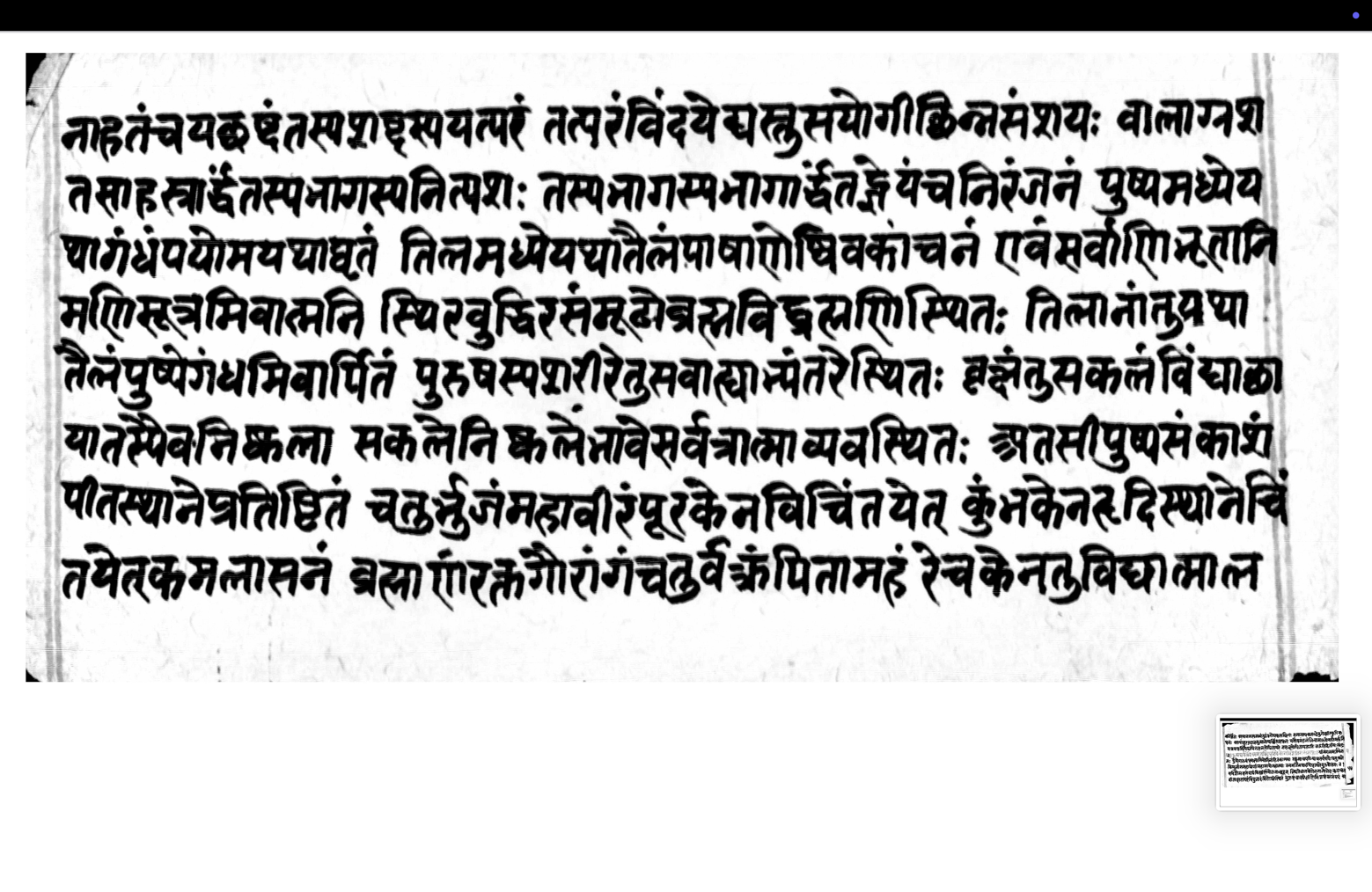
When dissolved in that, the yogi, with doubts cut away, [sees] that Brahman in the thousand-petaled lotus, stainless. In the middle of the flower, thus to be meditated upon, wonderful. As oil in the middle of sesame, in the mind, steady intelligence, unconfused, knower of Brahman, established in Brahman. As oil of sesame, and as fragrance in flowers, so established — in the body of the person, thus the Self, all-pervading, established.
The image is the classic one: the Self in the body as oil in the seed, fragrance in the flower — hidden, pervasive, waiting to be recognized.
A yoga-Upaniṣad's double gift
The Dhyānabindūpaniṣad belongs to the group of 'yoga-Upaniṣads' — late texts that folded the practice of meditation into the Upaniṣadic frame. Its double gift is the promise and the method: hearing to begin, meditation to continue. This tiny manuscript, five pages, preserves both.