
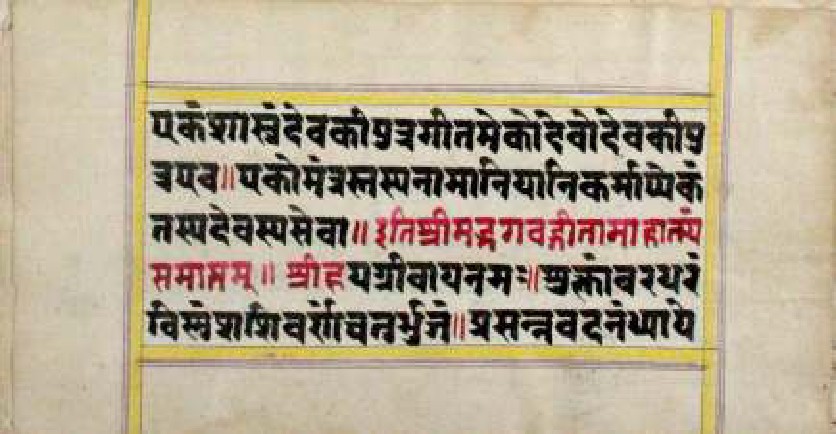
Some texts praise their subject. The māhātmya genre praises the text itself — and the Bhagavadgītāmāhātmya is one of the most enthusiastic examples. It is a work devoted to the power of the Gītā: what happens to you if you read it, recite it, or simply bathe in its waters.
What study does
The claims are direct and total.
For one devoted to the study of the Gita and one engaged in pranayama, there are no sins, even those committed in previous lives. Bathing in water daily removes the impurities of men, but bathing even once in the waters of the Gita destroys the impurities of worldly existence.
The comparison is carefully built: daily bathing cleanses the body; a single immersion in the Gītā cleanses existence itself. The text is being described as a river.
The one scripture
The māhātmya ends by collapsing the whole religious life into a single focus.
One scripture, the song of the son of Devaki; one God, the son of Devaki alone. One mantra, His names; one work, the service of that God. Thus ends the Glorification of the Bhagavad-gītā.
The text as a river of merit
Māhātmyas were the marketing arm of the tradition — texts that told you why another text was worth your life. The Bhagavadgītāmāhātmya, running to over three hundred pages in this manuscript, is a monument to that logic: the Gītā is not just true, it is powerful; not just wise, but cleansing. Reading it, you see how a scripture becomes not a book but a presence — something with its own agency, and its own waters.