
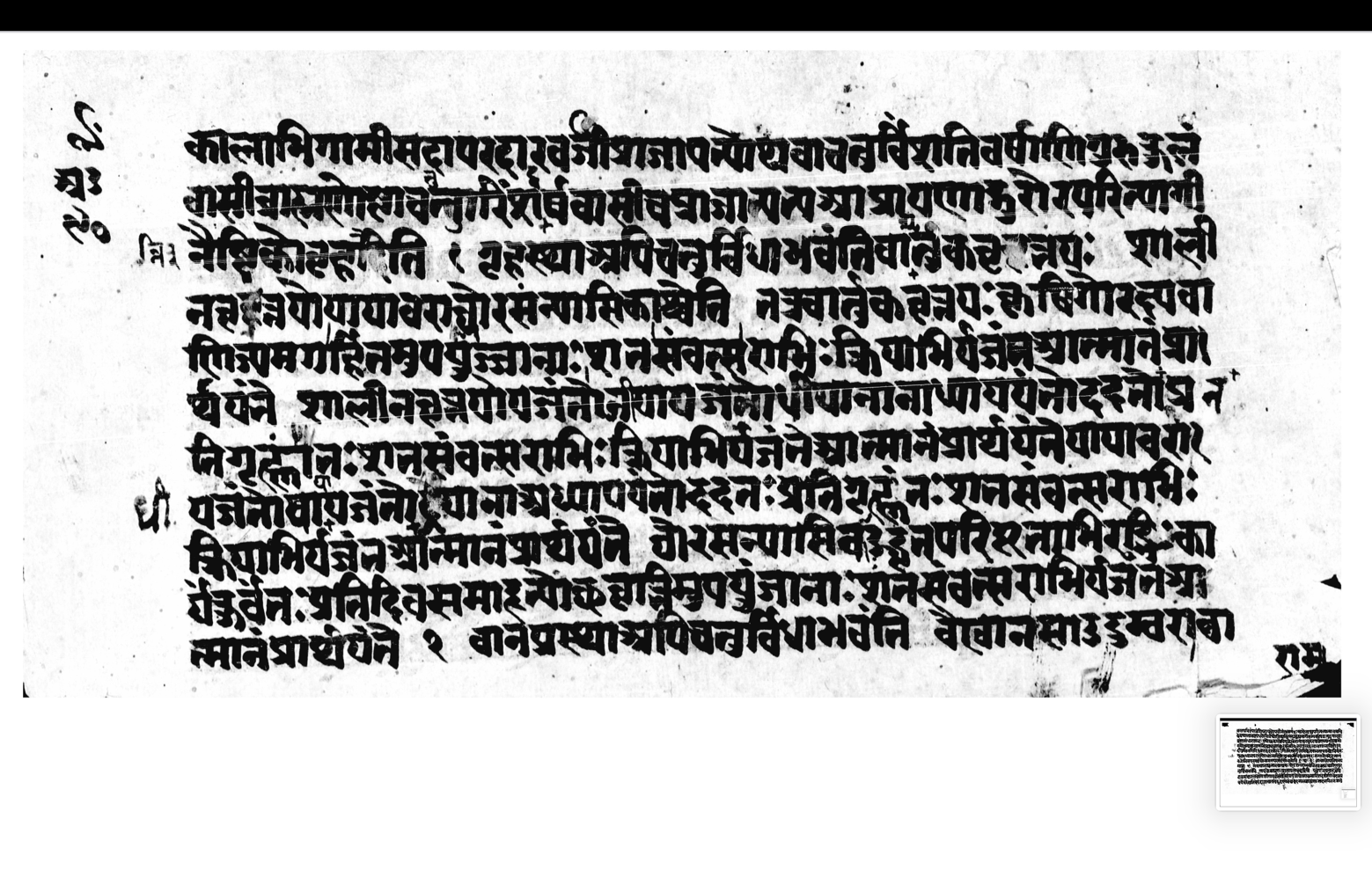
Some Upaniṣads ask what reality is. The Āśramopaniṣad asks something more practical: how should a life be lived? It is a small text on the four stages of life — student, householder, forest-dweller, renouncer — and the subdivisions within each, an architecture for a whole human existence.
The stages, subdivided
The text sorts each stage into its kinds, with the householder receiving the fullest treatment.
Householders are also of four kinds: those who live by trade, those who live by agriculture, those who beg for a night, and those who eat only what is left over from a sacrifice. Among these, one who lives by trade engages in agriculture, cattle-tending, commerce, etc., who eats only food obtained without begging, who always approaches his wife at the proper time, who avoids another's wife — he is a householder.
The householder is not one thing but four — defined by livelihood, by generosity, by discipline. The text is a taxonomy of the ordinary.
The student's vows
It gives the same care to the student stage, distinguishing the lifelong student from the one who studies for a time.
One who approaches his wife at the proper time, who avoids another's wife, who is a Prajāpati student in the fourfold manner in the teacher's house — observing proper conduct, having devotion — the Naishthika remains in the teacher's house for life.
A blueprint for living
The Āśramopaniṣad's genius is its subject: not the cosmos but the course of a life. It takes the messy business of being a student, a parent, a trader, a renouncer, and gives each stage a shape and a discipline. This tiny manuscript, five pages long, is a reminder that the Upaniṣadic tradition was not only about the absolute — it also cared about how a person should spend a Tuesday.